# a b c d e f g h i j k l m n o p q r s t u v w x y z
‘Bonfire of the Vanities’ Endures as Epic Hollywood Black Eye

‘Bonfire of the Vanities’ Endures as Epic Hollywood Black Eye

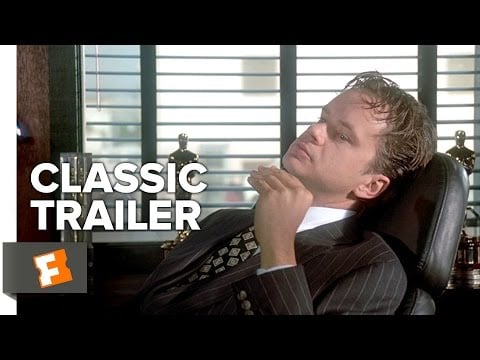
I’ve never encountered a film flopping with a louder, more surprising thud than Brian De Palma’s “The Bonfire of the Vanities” (1990).

Film buffs can usually detect these things coming, as the months leading up to release can often give red flags, leaked word of mouth or tell-tale trailers that the film in question is a turkey. The release of “Ishtar” (1987), for example, was all but met by a crowd of film critics, torches raised and knives sharpened, ready to carve the bird into oblivion.

With “Bonfire,” its reception snuck up on me and most of America.

YouTube Video

Other than word that De Palma (actually, his screenwriter, Michael Cristofer) had changed the ending Tom Wolfe had written for his phenomenal 1987 novel (upon which the film is based), the early word was stellar.

Leading up to its December opening, right in time for Oscar season, “Bonfire” was written up by many journalists as a potential Best Picture contender.

Everyone in the cast was coming off career highs: Tom Hanks was a recent Oscar nominee for “Big” (1988), Bruce Willis had branched out from comedy to score big with “Die Hard” (1988), Melanie Griffith was coming off her Oscar-nomination for “Working Girl” (1988), and co-star Morgan Freeman had just appeared in the 1989 Best Picture winner, “Driving Miss Daisy.”

Even De Palma, whose prior “Casualties of War” (1989) was a much-respected flop, still had the polish of “The Untouchables” (1987) from a few years earlier.

I remember exactly where I was when I found out “Bonfire” was in trouble: I was boarding a flight and was handed a complimentary copy of USA Today. The Life section had a one-star review of “Bonfire” on its cover and a still of the film, in which Hanks was seen behind bars.

It was if he and the whole movie were immediately sent to film penitentiary for life, with no chance for parole.

I am no cinematic parole officer, as the movie is even harder to watch today than it was in 1990. The swarm of legendarily bad, viciously snarky reviews it received (“More Like a Bomb-fire of Inanities!”) were truly mean.

Yet, decades later, after its brief run as a Christmas event film that became a national punch line, only a few movies from the same year (particularly “Problem Child” and “Ghost Dad”) were worse.

YouTube Video

It doesn’t help that I’m one of the many who read Wolfe’s novel, found it thrilling and saw the film and wondered if anyone involved had read more than the book jacket.

The opening scenes immediately demonstrate that something’s off, as a beautiful, time-lapse shot of New York City fades into De Palma’s much-discussed, minutes-long, unbroken tracking shot. Beginning in the basement of the World Trade Center into its massive, exquisite lobby, we see Willis playing tabloid journalist Peter Fallow, stumbling drunk and being guided to the unveiling of a press event, celebrating his novel.

When Willis’ severely overdone narration begins, it’s accompanied by David Shire’s dishearteningly generic score. Willis’ voice over, which carries on throughout the film, sounds exactly like his cutesy, what-me-worry vocal work he provided as the baby in “Look Who’s Talking” (1989).

The normally delightful Rita Wilson plays Willis’ press agent at such a manic pitch, and the dialogue is so overtly cartoonish, it almost undoes the magic of De Palma’s tour de force, cleverly designed and choreographed camera work.

We’re stuck in an unending shot, with characters who are obnoxious and only the technique of the filmmaking holding our attention, which come to think of it, is exactly what it’s like watching “Birdman” (2014).

We then push in on Hanks as Sherman McCoy, the film’s hero, a stockbroker and “master of the universe,” whose life takes a crucial and literal wrong turn. McCoy picks up his mistress, Maria (Griffith), from the airport, gets lost and strikes a young man with his car.

The hit and run haunts McCoy, who is quickly found out to be the culprit. With his career in free-fall, journalist Peter Fallow (Willis) and his ilk swoop in, picking apart the morsels of the circus, shaping and influencing the outcome of the sensational trial and news coverage that follows.

As an adaptation of a decade-defining novel, De Palma’s film is a disaster, but that description fits everything else here.

The film’s troubled making of was accounted in Julie Salomon’s stunningly tell-all, fly-on-the-prestigious-wall book, “The Devil’s Candy: The Bonfire of the Vanities Goes to Hollywood,” published in 1991. It’s a great read, so I’ll avoid reiterating any insider information that Salomon so deliciously dishes out.

Sometimes the filmmaking is dazzling, but it’s often shrill, like everything else here. The quirky choices by the cinematographer are eye catching but they’re capturing performances that would feel broad in an opera.

This is as ham-fisted as De Palma’s “Wise Guys” (1986), as he pushes the caricatured quality of the characters to an off-putting extreme. Much of this is akin to watching those bad, mid-1980s “Saturday Night Live” sketches that didn’t have Eddie Murphy to save them.

This is a good time to mention the crucial miscasting. While Kim Cattrall, Saul Rubinek and F. Murray Abraham all give loud, smug supporting turns, at least, on the surface, they appeared to be a good match for their characters.

The four leads offer star power but never fully connect with the material.

Hanks ably played dark roles much later in his career, but as McCoy, he’s too nice, doesn’t convey the character’s lust or greed and frequently overacts to compensate for how out of place he is.
In his establishing scenes, Hanks doesn’t appear to belong on Wall Street. To think what Michael Douglas, in his prime as the face of ’80s guilt and excess, could have done with this.

Since Fallow was British in Wolfe’s hands, it makes sense that Willis is playing him as a New Yorker and not attempting a cockney accent (on page, the role screams out for Michael Caine).

As Maria, Griffith certainly oozes desire, both for sex and extravagant living, as though her Tess McGill from “Working Girl” (1988) went over to The Dark Side, but her Southern accent is all over the place.

There’s a sequence written just for the film, in which McCoy and Fallow interact on a subway; it’s interesting watching Hanks and Willis, two very different actors, sharing a moment, but their scene and chemistry is forced.

Freeman brings the expected, authoritative weight to his scenes as the judge (Wolfe’s white, racist Judge Kovitsky becomes Freeman’s righteous, voice of reason Judge White on film). Noted New Yorkers George Plimpton, Andre Gregory, Alan King and Richard Belzer pop up in small roles, suggesting a grit and lived-in authenticity that De Palma never strives for but should have.

The story lurches forward when it should have been fast-paced and engrossing. Wolfe’s edgy, provocative material has been brought to the screen with the edges sanded down.

Character actor John Hancock plays Reverand Bacon, the film’s thinly guised spoof of both Rev. Al Sharpton and Jesse Jackson. It’s an ugly caricature, in a movie overflowing with them, but Hancock’s portrayal and the role itself display neither Sharpton nor Jackson’s charisma or showmanship.

Freeman’s climactic speech, the infamous “Be Decent To Each Other,” is a stinker, as is the rushed way the whole movie ends.

Wolfe’s brilliant, passionate and angry cautionary tale is all but gone, and the savage moments that break through here feel out of place. At one point, McCoy describes another character as “a poet, he has AIDS, you’ll love him!” The line should have satirical sting, but it just comes out as weird and mean spirited.

There’s an opera scene that, strangely, has an unmistakable and unfavorable similarity to the extraordinary opera scene from Jonathan Demme’s “Philadelphia” (1993), in which the pain in the music and the suffering of Hanks’ character in that film congeal.

The only scene that has any emotional impact is when Donald Moffat, playing McCoy’s father, confronts his son before the big trial. It’s the one moment that feels real. The insistence that everyone on screen be as crass as an obvious political cartoon undoes any of the nobler intentions of all involved.

It’s interesting to think that, at the very least, De Palma’s film was made during the time in which the novel was set, whereas any subsequent version would require expensive sets and costumes to recreate a lost era.

Wolfe’s novel was ahead of its time, but also VERY ’80s, whereas any subsequent adaptation would now have to stock up on the shoulder pads and “Frankie Says Relax” t-shirts.

Whereas Hank’s McCoy was eviscerated by the press and mocked openly in newsprint, “The Bonfire of the Vanities” was greeted by journalists all too happy to trample the film to death. It provided a real-life commentary on how the film and its subject matter died at the hands of movie critics who acted like vultures with vocabularies.

I wish I could say I was above picking on this movie, but time has not been kind to it, nor to anyone who endures sitting through it.

In the cinematic hall of shame, few infernos burned brighter than this “Bonfire.”

The post ‘Bonfire of the Vanities’ Endures as Epic Hollywood Black Eye appeared first on Hollywood in Toto.


from Movies - Hollywood in Toto https://ift.tt/YLFlUMn