# a b c d e f g h i j k l m n o p q r s t u v w x y z
Pratt’s ‘Mercy’ Will Make You Think (and Howl)

Pratt’s ‘Mercy’ Will Make You Think (and Howl)

The A.I. revolution is upon us, and filmmakers have taken the baton from James Cameron.

Someone had to.

“Mercy,” an A.I. infused thriller, is no “Terminator 2: Judgment Day,” the ultimate warning about our computer overlords.

It still makes us think about where artificial intelligence will lead us.

“Mercy” also reminds us that while Chris Pratt has charisma to spare, even he can’t camouflage some of the most manipulative storytelling this side of daytime soaps.

YouTube Video

Pratt stars as Chris Raven (dude, what a name, right?), a detective accused of murdering his wife. The story is set in a near future when A.I. bots lord over “Mercy Court,” where the accused have 90 minutes to prove their innocence or the chair they’re seated in goes electric.

Not Bob Dylan style, mind you.

Chris must mount a defense, and fast, while the A.I. judge (Rebecca Ferguson) lets him access all the media he might need to do so. Private videos. Public camera feeds. Data files. 

Nothing is off limits. Nothing is sacred. It’s a sly way of commenting on how much personal freedom we’re giving up in the digital age. It also assumes people are constantly filming themselves like a “Found Footage” competition that never ends.

It’s one of countless plot devices that keep “Mercy” afloat. Either you buy into the concept or you wait in the lobby until the film wraps. There’s no Plan B.

The case against Chris looks airtight. He’s an alcoholic with anger management issues, and a Ring doorbell-style video has him entering the family’s home a short time before Chris’ wife (Annabelle Wallis) was murdered.

Might as well crank up the chair and dispense with that 90-minute period, right?

But wait! Chris is a cop, after all, and he scrambles to find who the “real” killer is. Unless he blacked out and doesn’t remember committing the heinous act.

“Mercy’s” premise couldn’t be more fascinating or timely. How much should we trust A.I. intruding into our lives? What facts can be trusted, and which ones need context to fully explain? Can we outsource crime fighting to robots, especially if it greatly enhances our safety (as the movie insists in the opening moments)?

And if you’re gonna cast Pratt, you better make sure he does more than writhe in a chair for 100 or so minutes.


View this post on Instagram


A post shared by Mercy Movie (@mercymovie)

“Mercy” isn’t dull despite the static setting. The interrogation room doubles as a holodeck of sorts, allowing director Timur Bekmambetov (“Wanted,” “Night Watch”) to flood the screen with digital imagery tied to the case.

That can be fascinating at times, but in other sequences it might make audiences laugh out loud. It should.

The more Chris digs into his defense, the wackier the story becomes. The third act turns the dial to 11 before snapping it off entirely. We didn’t need “Mercy” to take such a drastic turn, but Bekmambetov is determined to expand the narrative beyond all sense of reason.

Ferguson is a cool, chilling presence as our cyber-judge, but the film allows her to grow in the grand Data/”Star Trek” tradition. The results are wobbly, at best, but it does make us consider how ChatGPT and its ilk process information and, in a frightening fashion, adapt to new realities.

Remember that story of an A.I. bot that was told to shut down … but didn’t? “Mercy” thrives when we flash back to headlines like that.

For all its myriad flaws, “Mercy” keeps flirting with issues that overlap with our reality. That, and a narrative that never slows down, make it oddly irresistible.

Silly. Corny. Predictable. Outrageous. But irresistible.

HiT or Miss: “Mercy” is sillier than most sci-fi thrillers, but a determined Chris Pratt and themes that overlap with our digital age make it all too chilling.

The post Pratt’s ‘Mercy’ Will Make You Think (and Howl) appeared first on Hollywood in Toto.


from Movies - Hollywood in Toto https://ift.tt/iNrF2wA
‘Labyrinth’ Made the ’80s SO Much Better

‘Labyrinth’ Made the ’80s SO Much Better

Jim Henson’s “Labyrinth” (1986) is more than deserving of the cult following it continues to build worldwide.

Back in theaters to celebrate its 40th anniversary, Henson’s wild puppet fantasy, a hybrid fantasy/comedy/musical/fairy tale, carried two human actors who are surrounded by massive sets and hordes of puppeteers, was a box office flop in 1986.

Of course, we should consider that it was released during the summer of 1986, with the dominance of “Top Gun” and “Ferris Bueller’s Day Off.” There were lots of unworthy casualties that season – remember, John Carpenter’s “Big Trouble in Little China” also died that summer and has a fanbase as vocal as this one.

YouTube Video

When we meet Sarah (Jennifer Connelly), she’s cosplaying a scene from a novel she carries with her, called “The Labyrinth.” Visibly alone in a park near her house, in costume, Sarah’s devotion to reciting fantasy lit dialog seemed strange in 1986.

Now, I can think of at least three people I know exactly like her, as well as recognizing her brand of fandom every time I’ve attended a Renaissance Fair.

In other words, “Labyrinth” was ahead of its time, and not just in its inching towards the kind of full-fledged fantasy epic Peter Jackson would attempt and pull off decades later (though other ’80s fantasies came close, such as the 1981 “Dragonslayer” and the 1985 “Return to Oz,” both flops-turned-cult films).

Henson’s protagonist, the 1980’s mall equivalent of Alice tumbling through Wonderland, was exactly the kind of genre fan and convention attendee that was not given pop culture distinction at this time. By the mid-’90s internet explosion, this time of open-and-proud-of-it-fandom is a part of the culture.

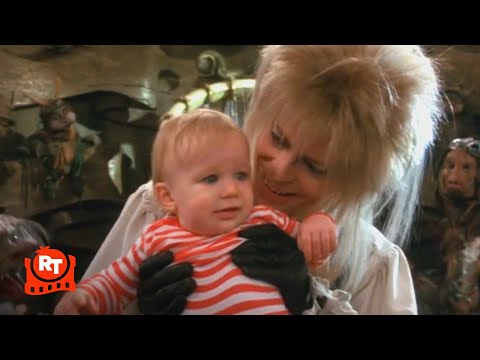
Anyway, Sarah’s parents are leaving for the night and require Sarah to watch over Toby, her baby brother. Sarah couldn’t care less that her parents don’t get out much and is furious at the assignment. Taking a cue from “The Labyrinth,” Sarah half-heartedly uses the logic of the book to summon the Goblin King (David Bowie) to take her brother away.

When the Goblin King shows up, Sarah is frightened, suddenly thrust into a fantasy world of dream logic and bizarre creatures. Sarah pleads with him to give her Toby back, but he relents, instructing her to travel through the massive maze that leads to his castle by a certain time, or her brother will turn into one of his goblin minions.

With that, we’re off.

Bowie might have been better off playing the role without the massive wig, and the character’s motivations are somewhat vague in the third act – is this a seduction or, as in the rest of the film, is Jareth simply messing with Sarah?

The Goblin King seems to stand in for the cynical adult world that awaits Sarah, while her ascension into this fantasy world, as well as Connelly’s compelling performance, suggest a young woman just inching towards the tween years (Connelly was 15 when she made this).

YouTube Video

It’s Connelly’s film and, even when she lands on a clunky line reading, she carries the film ably. Her sincerity helps us to believe in all the wild creatures she encounters. Considering that this was Connelly’s third film, and after working with Sergio Leone and Dario Argento(!), it’s no surprise that she wound up one of the best American actresses of her generation.

Diehard Bowie fans don’t typically cite this film as being among their favorites (the “Never Let Me Down” era never gets much respect), but really, this film made lots of kids too young for Ziggy Stardust an overnight Bowie fan (at least that’s my story).

The key ingredient isn’t Henson or co-producer George Lucas but Terry Jones, the Monty Python member whose sense of humor and character comedy is present during the best sequences: Sarah’s hilarious pep talk from a helpful, scarf-wearing and tiny worm, as well as the contentious door knockers and the bizarre creatures who present her with a riddle, all are fragments of peak Python lunacy.

Henson saturates the screen with oodles of puppets as much as he did in his magnum opus, “The Dark Crystal” (1982), though that film is far darker and meaner (and still better). A sequence where Sarah is chased by the Cleaners is riveting. So is the M.C. Escher-inspired finale, where Sarah pursues her baby brother in a gravity-free room.

When the film becomes a David Bowie video, it’s a mixed bag: the clunky “Magic Dance” is the fan favorite, but I love the eerie masquerade of “When the World Falls Down” and the rousing “Underground” so much more.

The stranger “Labyrinth” gets, the richer it is: hoarders will likely see their waking nightmare embodied by The Junk Lady. The Helping Hands are as arresting as they are unsettling.

Henson rightfully acknowledged the inspiration of Escher and Maurice Sendak in the end credits. Sarah’s bedroom items thoroughly suggest that the story is all in her mind, as various books (ranging from Sendak’s 1963 “Where the Wild Things Are” to L. Frank Baum’s 1900 “The Wizard of Oz) and figurines suggest the whole thing is in her head.

YouTube Video

A deeper form of exposition has been spotted over the years that I find startling: an early pan around Sarah’s bedroom shows us newspaper clippings of her mother, Linda Williams, a stage actress, in a relationship with an actor who is clearly played by David Bowie.

This makes the scenes between Jared and Sarah have a darker, more pronounced weight, as he may be a representation of someone who seduced her mother in the past. As someone who grew up watching this movie and didn’t come across this subtext until recently (the slow-motion pan and scan Blu-ray option is, yet again, a reason I love physical media and what it allows film lovers).

Without this subplot, the film still works, but there’s an elevated danger knowing that The Goblin King, in some form, has always been a threat to Sarah.

I should also mention Trevor Jones’ score, which is especially good when the tone gets scary. The majority of “Labyrinth” is light and fun, though I find it most impactful when it leans into universal fears (that early scene where Sarah finds an empty crib and suspects otherworldly critters are sneaking around the room is terrific).

The episodic story, frequent tonal shifts and moments of camp are why I still give Henson’s “The Dark Crystal” the edge. That said, “Labyrinth” succeeds as a “Wonderland”-like fable, where the dangers of real life are conveyed in a skewered fantasy landscape.

Odd as it may be, the Goblin King remains Bowie’s most well-known acting role in a film. This is the insanely talented artist and part-time film actor who once worked for Nicolas Roeg, Tony Scott and David Lynch. Bowie played Pontius Pilate for Martin Scorsese and his best, most astonishing film transformation was playing Andy Warhol in “Basquiat” (1996).

Yet, who could forget the time he turned a glass ball into a snake, held it end-to-end and tossed it at Jennifer Connelly?

The post ‘Labyrinth’ Made the ’80s SO Much Better appeared first on Hollywood in Toto.


from Movies - Hollywood in Toto https://ift.tt/pViqXvI
Agatha Christie Would Love ‘A Private Life’

Agatha Christie Would Love ‘A Private Life’

Rebecca Zlotowski’s “A Private Life” stars Jodie Foster as Dr. Lillian Steiner, an American psychiatrist living in France with a revolving door of clients.

When one of her patients turns up dead, Steiner suspects foul play and investigates what appears to be a murder cover-up.

This cool little mystery, led by Foster’s excellent performance and a willingness to be old school in its presentation, is a French film with Foster ably speaking French for most of the running time.

Don’t let the subtitles turn you away. This features a gem of performance from Foster and an approach to the whodunit genre that is both a throwback and refreshingly offbeat.

YouTube Video

“A Private Life” is low-key enough to merit comparison to the best of classical whodunits (I don’t mean “Knives Out,” I’m talking about Agatha Christie or even Arthur Conan Doyle). It manages to include enough touches of caustic humor to be contemporary.

Although set in modern day, Zlotowski’s film could have been a 1950s-set period piece.

Foster brings her natural authority, vulnerability and charisma to the role of a shrink who carries her patient’s secrets, making her an unwelcome presence in mixed company. This touch is handled well – when you’re a psychiatrist doing amateur sleuthing, how much of it is personal discovery and when does it cross the line if the suspect is a patient?

If you’re listening to the daily struggles and personal testimonies of patients and sworn to secrecy, how do you investigate suspects that have hired you to help them find catharsis?

It’s not a thriller akin to Foster’s hall-of-fame entries, “The Silence of the Lambs” (1991) or “Panic Room” (2002). It’s also, thankfully, not among frivolous wannabes like “Flightrisk” (2004) or “The Brave One” (2007).

YouTube Video

Unlike the recent, Foster-led season of “True Detective” (2024), her latest is enticing and fun most of the way and doesn’t crash in the late going. While the mystery maintains its fascination, there’s also a sustained lightness here that reminded me of Christie’s long-running 1952 play, “The Mousetrap.”

Also, and this is one of the best things about the film, there are scenes taking place in Foster’s mind that are so visually dazzling and cleverly handled, they merit comparison to David Lynch.

Surrealism can come across as heavy-handed and trying to hard if its not handled well. Here, it’s a welcome, unexpected touch.

Zlotowski deserves credit for including these stunning interludes, which don’t derail the film or distract from the carefully established tone.

“A Private Life” is also centered and interesting enough in its depiction of psychiatry to emerge as the better film of the season on the topic, surpassing the awful, crass scream fest “If I Had Legs, I’d Kick You.”

I wish there was a bigger kick to the final reveal, but the film overall manages to conclude in a satisfying way. If Foster winds up making a series of these films, then a new franchise is off to a strong start.

Three stars

The post Agatha Christie Would Love ‘A Private Life’ appeared first on Hollywood in Toto.


from Movies - Hollywood in Toto https://ift.tt/wcPDOXS
Ethan Hawke Makes ‘Blue Moon’ Magical

Ethan Hawke Makes ‘Blue Moon’ Magical

Few American actors are better at playing idealistic young dreamers than Ethan Hawke, and his characters have matured gracefully along with him.

They’re still full of wanderlust or pent-up creative energy, only now it’s tempered by experience and the errors of their ways. Now that Hawke is well into middle age, along with the rest of Generation X, he can provide a more nuanced approach than his earlier roles invited.
YouTube Video

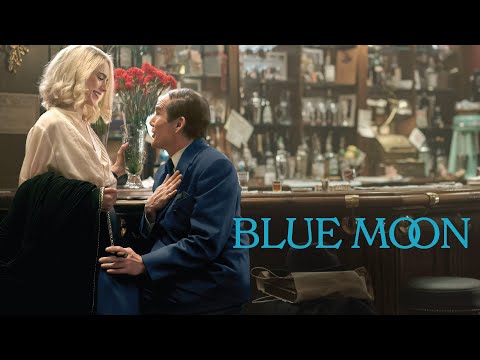
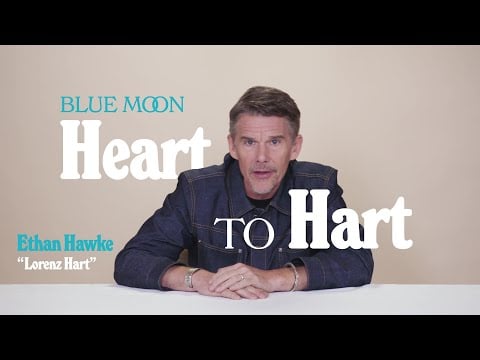
When we first meet Hawke as legendary lyricist Lorenz Hart in “Blue Moon,” he’s lying down in a rain-swept alley, clearly on the brink of death. Alone, as he famously wrote, without a dream in his heart.

We then rewind to a few months earlier, and we learn how, over the course of a single evening, Hart and heart alike were both shattered. Director Richard Linklater’s film proceeds to weave an engrossing spell on the viewer, but it’s Hawke’s performance that ultimately binds it all together.

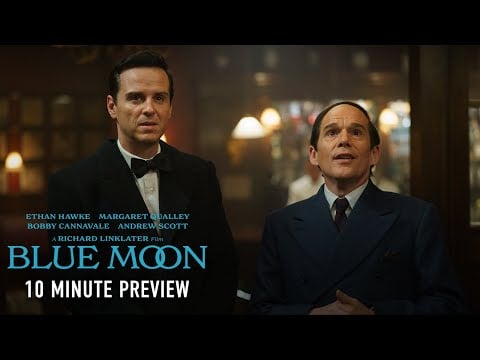
The lyricist stumbles into Sardi’s Restaurant, and the bartender (a wonderful Bobby Cannavale) aims a gun at him. It’s a private joke that they’ve laughed along with many times.

Lorenz starts to talk, sometimes playing off the bartender, the GI playing the piano and various people entering the restaurant. At other times he’s talking to no one in particular, just hoping someone hears him speak.

“Oklahoma!” has just opened on Broadway and “Larry” Hart is understandably resentful of his former partner Richard Rodgers’s success with a new lyricist, Oscar Hammerstein. He sneers at the sort of “cornpone” Americana his one-time collaborator is selling now that the country is at war.

He takes particular exception to the use of an exclamation mark in the title.

Lorenz speaks out on various other subjects throughout the night, like the dialogue in that great new film, “Casablanca,” and what he finds most erotic (the latter can’t be shared here).

Most provocatively, in an inversion of the Main Character Syndrome he seems at times to be afflicted with, he suggests that if the world’s a play, we’re all just extras in it. It’s a commentary that will sadly echo as the night grows older.

Mostly, though, he talks about Elizabeth (Margaret Qualley), a 20-year-old Yale fine arts student with theatrical aspirations of her own.
YouTube Video

He sees the possibility of a new muse in her, and plans to finally win her over with flowers and a copy of W. Somerset Maugham’s “Of Human Bondage.” Alas, when they get the chance to talk in private, we find out the latter offering is all too appropriate.

That, and his abortive attempt at reviving his partnership with Rodgers when the latter arrives to celebrate his newest success, tell him the band has long passed him by.

Hawke’s take on this role comes one immediate strike against him. He doesn’t look anything like the real Lorenz Hart. His face was already halfway there when he played Chet Baker, but this time he has to undergo an all-too obvious makeup job that makes him look more like Henry Fonda than anyone else.

There’s also the fact that Hart topped out at five feet tall at the most, and Hawke is just an inch or two under six. That means we get several awkward moments where he’s posed with other actors in an attempt to create the illusion of a great height difference.

No matter, because Hawke is electrifying as a man still trying to locate the spark of life within him, and it’s near impossible to think of another actor who could do so well in the role. We spend the evening as transfixed on him as Wallace Shawn was on Andre Gregory during their dinner together, just enjoying listening to him talk both the evening and his regrets away.

He speaks in a rapid-fire patter, barely giving himself a moment to breathe, and yet we’re able to take in every word without difficulty. He’s alternately funny, frustrating (on purpose) and thoughtful, and we’re ultimately emotionally invested in him, despite his personal flaws.

Linklater is uniquely suited to this project, having previously made “Before Sunrise” and “Dazed and Confused,” films consisting largely of extended conversations over a single evening. Even going back as far as “Slacker” he evidenced a great delight in listening to eccentrics speak, bouncing one conversation off another, and allowing his characters to reveal themselves in the process.

Of course, Hawke and Linklater wouldn’t be able to work as well together without the benefit of a decent script, and Robert Kaplow (who previously wrote another of Linklater’s finest films, “Me and Orson Welles”) provides the right words for their music.

The dialogue embodies the sort of perceptive, twisting wit that was a hallmark of Hart’s own lyrics. Did Lorenz Hart really talk like this? I don’t think anyone ever did, but it’s the way he should have spoken if one just goes by the way he wrote.

Not all of the film works quite as well. A brief discussion with fellow restaurant patron E.B. White is initially amusing. Hart finally holds a conversation with someone who is his opposite in personality but still able to match him in witty perceptiveness. But when Hart helps come up with a name for the mouse in the children’s story White is writing, it’s far too cloying.

It seems even more contrived that he should also have similar meet-cutes with Stephen Sondheim and George Roy Hill (he’s simply referred to as “George Hill” and who will recognize him as the future director of “The Sting” and “Butch Cassidy and the Sundance Kid?”) in the same evening.

Moments like these belong in fables like “Forrest Gump,” not in a drama of realistic possibilities.
YouTube Video

Then there’s Qualley’s character, who takes our breath away the moment she enters the room. If she doesn’t match Hawke in the reading of lines, she at least is able to similarly command our attention as well.

The real Lorenz Hart may not have been attracted to women, but we can understand why he’d be enamored of this one specifically.

There’s nothing wrong with her performance, yet there’s something about how the character is presented that makes her sensibilities seem too modern for the period milieu. Qualley disappeared into her character and the Sixties setting in “Once Upon a Time … in Hollywood,” but from the moment we first see her in “Blue Moon,” she seems like a 21st-century-woman in 1940s fashions.

Then again, maybe that’s the whole point. The cliché is to have the younger woman represent a past chance, a missed opportunity for a better life that the hero never grasped. But Qualley instead speaks for a tomorrow that will never come for our protagonist.

For once, he’s forced to truly listen to someone else speak, limiting his interruptions. And near the end, when his former songwriting partner spirits her away from him, we realize that even had he lived longer, his career would likely not have survived the shifting waves of postwar public taste, at least not as well as Rodgers managed to.

“Blue Moon” marks the ninth collaboration between Hawke and Linklater over a 300-year span. It’s a far less prolific partnership than that between Rodgers and Hart, but they’ve still managed to produce a small handful of movies together that will likely at least enjoy cult status.

Lorenz Hart, in contrast, was just 48 when he died, but had packed enough work for three lifetimes, having written (at conservative estimations) at least 800 songs alone or in collaboration. It’s only a small percentage of those that endure, however brightly.

It’s difficult for those of us who have followed their careers to think of Hawke being 55, or even for Linklater being 65. They have matured as artists and display a wisdom not apparent in their younger years, but there’s still a youthful vitality to their work that refuses to fade.

Perhaps Hawke and Linklater could have made “Blue Moon” earlier, but it’s unlikely they could have done so with the same level of depth and understanding of what truly matters in art and life alike.

We should be glad they waited this long: “Blue Moon” is one of the best movies of 2025.

The post Ethan Hawke Makes ‘Blue Moon’ Magical appeared first on Hollywood in Toto.


from Movies - Hollywood in Toto https://ift.tt/z6B1cAn
Wake Us Up from Dreamy ‘Sound of Falling’

Wake Us Up from Dreamy ‘Sound of Falling’

Sometimes watching a movie is like seeing someone’s dreams, a hypnotic experience where we get to witness the obsessions and fantasies of an artist.

At other times, watching a movie can be like listening to someone describe their dreams, which can be dreary and patience testing. Mascha Schilinski’s “Sound of Falling” begins like the former but becomes the latter.

This love-it-or-hate-it drama, an acclaimed favorite on the film festival circuit and probable Oscar contender, has it followers. I was completely on board with Schilinski’s vision at first, until I got to the point where I couldn’t defend it and just wanted it to end.

YouTube Video

“Sound of Falling” is a highly stylized German film, showing us a family that has lived in a home a century ago, lingering on their daily lives and unguarded moments. Then the story jumps to a generation later, with the family living during World War II, then during the 1980s, then in more contemporary times.

Sometimes we see this family in a different setting but most of the film centers around the property that opened the film and lingers on the moments that are private and unflattering.

Comparisons to the films of Ingmar Bergman are merited, as the pace, tone and visuals reminded me of some of his darker, more contemplative films.

Yet, to go with a more crassly mainstream comparison, “Sound of Falling” is exactly what Robert Zemeckis’ “Here” (2024) was trying to be. In both films, the camera is the eye, as we are the invisible visitors/observers watching different generations of people inhabiting a single space over periods of time.

Schilinski’s eerie film is like “Fanny and Alexander” (1982) crossed with the darkest detours from David Lynch or Lynne Ramsay. In fact, the entire first act reminded me of Lynch’s “Eraserhead” (1977). I mean this as a compliment. and this portion of the film had me bewitched and optimistic.

YouTube Video

In some scenes, characters are seen gazing directly into the camera, right at us, a truly unsettling feeling. The editing will take jumps into the near future, showing us a character we’re currently watching, then revealing the moment of their death, then cutting back to where we left off.

Then the story cuts to a more recent time in human history, but the feeling of being a voyeur never ceases. Sometimes, we watch what seem like random moments. At other times, the characters take focus and become vivid and relatable.

Like the best films of Lynch, it fluctuates wildly between resembling a gorgeous painting or a dread-inducing waking nightmare.

“Sound of Falling” turns uncomfortably intimate and difficult after an hour, becoming hard to endure, let alone remain invested in. My admiration remains for the artistry, but the film becomes unbearable.

At 155 minutes, the endless loop of discomfiting, often perverse imagery wore me down. There is true film artistry here and the film will stay with you but whether you want to experience something this taxing in full is up to the viewer. David Lynch came up a lot in my critique, reminding me how much I miss him but also how much heart and humanity exists in his work, even at his coal-black darkest.

“Sound of Falling” needed to be more like Lynch, with his tendency to linger on lost innocence, and less like invisible, unholy surveillance footage. Schilinski is a major talent, and I’m looking forward to whatever she does next, but I won’t ever watch “Sound of Falling” again.

Two Stars (out of four)

The post Wake Us Up from Dreamy ‘Sound of Falling’ appeared first on Hollywood in Toto.


from Movies - Hollywood in Toto https://ift.tt/Lsme0UJ
Someone Should Bury ’28 Years Later: The Bone Temple’

Someone Should Bury ’28 Years Later: The Bone Temple’

It takes a special skill to make a dull zombie flick.

Zack Snyder’s “Army of the Dead” managed that dubious feat. So did Jim Jarmusch’s “The Dead Don’t Die.” At least “We Bury the Dead,” which focused on grief more than gore, kept our attention.

Those films all have some pluses, something that’s harder to say about “28 Years Later: The Bone Temple.” We could blame director Nia DaCosta, still smarting over her disastrous MCU debut (“The Marvels”), for the anemic sequel.

The real culprit is screenwriter Alex Garland.

The mind behind the “28 Days Later” franchise didn’t know where he wanted the story to go next, apparently. He settled on mindless torture, paper-thin characters and a story arc about a kinder, gentler corpse.

No cap.

YouTube Video

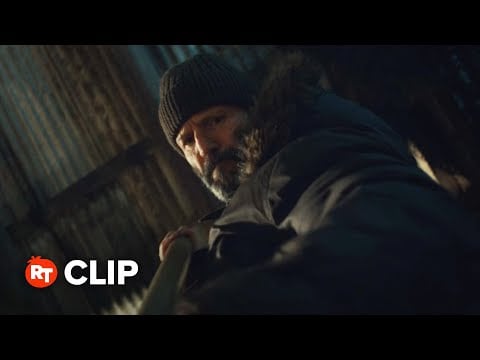
Spike (Alfie Williams), the lad introduced in 2025’s “28 Years Later,” is now part of a murderous gang who wear stringy blond wigs.

Their leader, Jimmy Crystal (Jack O’Connell), indoctrinates poor Spike into the crew in the dumbest scene possible.

Some might call that a sign.

Jimmy’s acolytes (dubbed his Fingers) wander the undead landscape, searching for a story that never appears. Sure, they bump into other human survivors, but nothing that remotely resembles a subplot emerges.

Unless you consider torture a narrative perk.

Meanwhile, Dr. Kelson (Ralph Fiennes) is still puttering about his Bone Temple in between encounters with an “alpha” zombie he dubs Samson (Chi Lewis-Parry). Dr. Kelson repeatedly drugs Samson to ensure his personal safety, but in doing so discovers something that could help humanity survive the undead apocalypse.

Or, Dr. Kelson just needs a friend. Where’s Wilson when you need him?

RELATED: THE BEST ZOMBIE MOVIES POST ’28 DAYS LATER’

“The Bone Temple” is aggressively bloody, but while some horror leans into the icky stuff, like the darkly comic “Terrifier” saga, “Temple” lacks purpose. Even more unsettling? Why do we care about any of these characters?

Poor Spike isn’t much of a focal point, and he’s too small to make a difference. Spike’s growing bond with a fellow Finger (Erin Kellyman) is weak at best, robbing the film of a compelling subplot.

And why does anyone follow Jimmy in the first place? O’Connell can be mesmerizing, and he’s burning endless calories here, along with a red-skinned Fiennes. There’s no substance behind the theatrics.

Garland’s often astute storytelling evaporates early on, and his dialogue is a blend of coy musings and over-the-top blather.

Make it stop. That goes for the movie, too.


View this post on Instagram


A post shared by D-BOX Technologies (@dboxtech)

The third act features a gonzo deep cut that, taken by itself, is gloriously unhinged. Seen as part of the big picture, though, it feels like a franchise frantic for a “member berries” moment.

“The Bone Temple” is pure visual noise. Ugly, visual noise, to be exact. Some of the better zombie movies have something to say, either a gloomy take on societal decline or observations on race and capitalism. The previous movie observed how humanity reverts back to classic gender roles during a societal reboot.

This film’s most inventive twist? Sure, those flesh-eating zombies are bad, but the remnants of humanity are even worse.

Whoa! If only zombie king George A. Romero had thought of that first.

Oh, wait, he did. And so did other filmmakers who have tried their hand at undead thrillers.

It’s the genre’s laziest trope, but it’s almost all “The Bone Temple” has to offer … unless you count Dr. Kelson trying to rehabilitate Samson before it rips his brain and spinal cord out.

There’s nothing here of consequence … until the epilogue.

No spoilers, of course, but expect a clunky stab at social relevance that comes out of nowhere and can’t connect with anything we’ve just witnessed. It will make TDS sufferers cry out in recognition, if this critic’s screening is any indication.

The best to be said about DaCosta’s direction is that she captures that frenzied, “28 Days Later” style that connects franchise installments. She also makes the very most of that titular Temple.

Beyond that, there’s precious little to savor from her handiwork or a franchise that has run out of things to say (or kill).

HiT or Miss: “28 Years Later: The Bone Temple” isn’t just a sorry excuse for a sequel. It’s a prime candidate for the year’s worst movie. And it’s only January.

The post Someone Should Bury ’28 Years Later: The Bone Temple’ appeared first on Hollywood in Toto.


from Movies - Hollywood in Toto https://ift.tt/J2pz5fm
‘Primate’ – Avoid Furious George at All Costs

‘Primate’ – Avoid Furious George at All Costs

In the opening scene of Johannes Roberts’ “Primate,” a dumbbell wearing a loud Aloha shirt visits a chimpanzee habitat, makes annoying wisecracks to the visibly unhappy chimp and, within seconds, gets his face ripped off.

We know why this happened.

A pre-title card informs us that chimps who catch rabies can become dangerously aggressive. I suspect a more plausible reason for this scene, as well as the entire movie: someone suggested in a studio meeting that the simian attack scene in Jordan Peele’s “Nope” (2022) was far too subtle.

YouTube Video

We meet a group of dumb, attractive teenagers, whose characters can be summed up as The Stoner Guy, The Sober Responsible One, The Hot Girl Who Will Die Immediately, The Younger Sister of the Responsible One, etc.

The actor with the most to do is Trot Kotsur, the wonderful, Oscar-winning actor of “CODA” (2021). Kotsur is playing an author who apparently writes awful books (sporting titles like “A Silent Death”) and has a pet chimp, whom he forces to wear an ugly red t-shirt, in his fancy cliffside home.

Clearly, Kotsur deserves better. So does the audience.

This chimp slasher movie devolves into a trapped-in-a-swimming-pool-with-a-killer-chimp thriller. The whole thing is set on Oahu, which is conveyed with lots of Aloha shirts, beach vistas and “Hawaii” signs, but the end credits (and unconvincing art direction) reveal this was filmed nowhere near a Hawaiian island.

Speaking of unconvincing, the core threat, Ben the Chimpanzee, is either a guy in a suit or an animatronics puppet but, either way, it never looks remotely real. It actually helps, as this is a hateful exploitation flick, not about a ravenous jungle creature turned bad but, far more dubious, a domesticated, ASL-speaking chimp, the kind featured in Francine Patterson’s 1978 children’s book, “Koko’s Kitten.”

I get it, nothing is off limits in the horror genre (Exhibit A. the recent “Winnie the Pooh”-inspired kill-fest). Yet, the ick factor in this is off the charts, which some genre fans will be happy to note.

Some of “Primate” is truly vile, such as the ample, showy gore set pieces where faces are yanked off and eaten. Much of the film is unintentionally hilarious. I’ll give Roberts proper credit for making a technically competent film, and I loved the bit where the chimp knows how to use a key fob to catch a victim.

Otherwise, I spent the running time rolling my eyes in disgust or laughing at it in contempt.

YouTube Video

I’m old enough to remember the 1986 Richard Franklin thriller, “Link,” which starred Elisabeth Shue and Terrence Stamp and is just like this movie, only with one teenager instead of a half dozen. “Link” was also a stinker, though I’d rather revisit that one than suffer through this again.

The moments that try to tap into Ben the chimp’s tortured transformation and stifled humanity are the worst – the filmmakers and sadistic screenwriter don’t care about this animal and are just setting up another moment where the creature will perform more unwanted dental surgery on a cluster of dumb characters.

How stupid are these people? The realization that Ben the chimp has rabies arrives absurdly late, as does the suggestion that getting in a pool can protect the cellphone-obsessed teens.

Another character comes rushing back to his house, which has obviously been trashed by the chimp, but is distracted enough by a slice of pizza to miss the danger standing right behind him. Yet, if anyone in this movie acted like a rational human being and called the proper authorities early on, the story would have wrapped up after 11-minutes.

Here’s a small way to improve this awful movie: rather than a forgettable title like “Primate,” why not call it “The Chimpening” or “Furious George?”

One Star (out of four)

The post ‘Primate’ – Avoid Furious George at All Costs appeared first on Hollywood in Toto.


from Movies - Hollywood in Toto https://ift.tt/ADlsSZj
‘Father Mother Sister Brother’ Is Pure Jarmusch Gold

‘Father Mother Sister Brother’ Is Pure Jarmusch Gold

Jim Jarmusch’s “Father Mother Sister Brother” is a three-story anthology film exploring the bonds we have with our siblings and the way so many of us can say we love our parents but had to survive an unsteady upbringing.

Like his poetic, deeply moving “Paterson” (2016), Jarmusch’s latest stars Adam Driver. The film begins slowly, establishes repeating patterns, dawdles long enough to make you wonder if it will all come together, until it does, beautifully.

YouTube Video

We open on the segment titled “Father,” in which a brother and sister (Driver and Mayim Bialik) drive to a remote part of New Jersey to visit their dad (Tom Waits). The pre-visit conversation suggests there will be tension and that the isolation of the father’s location extends to how he’s viewed by his children.

Among the details that come up in this segment that have stayed with me – Waits’ patriarch reminds his children how he used to make “cookie chicken” and that they used to love it. Maybe I’m wrong about this but is he saying that he used to sprinkle crumbles of cookie atop a chicken and bake it for their amusement?

From the looks of things, I think I’m right about this.

The sequence is a long piece of three-person drama, with what remains unsaid having even more dramatic weight than what comes out in casual conversation. Waits is extraordinary during this sequence, though I was especially impressed by Bialik, who I remember once stole Garry Marshall’s “Beaches” (1988) by playing a younger Bette Midler.

The story jumps to the next vignette, set in Dublin, titled “Mother,” with screen legend Charlotte Rampling playing a writer awaiting the arrival of her daughters (Cate Blanchett and Vicky Krieps). Although this segment is unrelated to the one that came before it, there is overlap in the topics that arise (ranging from water to the omnipresence of skateboarding teens in the distance).

Also, most pivotally, we’re struck by the knowledge we carry from the dialogue occurring before the gathering and witness how so much should be discussed but goes unspoken.

Finally, we arrive at “Sister Brother,” the best segment, where a different pair of siblings (Indya Moore and Luka Sabbat) are tasked with going to the apartment of their recently deceased parents. During their time together, the brother and sister reconnect with their past via memories and uncovering photographs reminding them of where they come from.

What I’ve provided above is a fairly simple, spoiler-free description of the plot but seeing this is so much better than the synopsis above. Jarmusch, as always, creates a distinct mood. Filmgoers who don’t like his movies often dismiss his work as “detached,” while I’d say his best films are observant, patient and full of universal truths.

Jarmusch’s last film, the all-star zombie comedy, “The Dead Don’t Die” (2019), felt like an in-joke and a rare failure in his body of work. What this filmmaker is capable of includes the fantastic Bill Murray career highlight “Broken Flowers” (2005) and the delightful “Mystery Train” (1989).

Cinephiles tend to lean into the one-two punch of Jarmusch’s breakthroughs, “Stranger Than Paradise” (1984) and “Down By Law” (1986) but I’m a bigger fan of the loopy “Night On Earth” (1991) and “Ghost Dog: The Way of the Samurai” (2000), Jarmusch’s best film.

YouTube Video

“Father Mother Sister Brother” is among Jarmusch’s finest, in that its staying power sneaks up on you. The early scenes are interesting but vague – where was the movie going? By the time you get to the emotionally rich final scenes, Jarmusch isn’t just applying his one-of-a-kind brand of cool and creating another richly textured cinematic mix tape, he’s reminding us of the complex relationship we have with our parents and legacies.

As with “Paterson” and “Broken Flowers,” the first act had me curious but feeling in the dark, but the payoff is so touching and thoughtful, it left me enriched by the experience…it also inspired me to call my parents.

Three and a half stars (out of four)

The post ‘Father Mother Sister Brother’ Is Pure Jarmusch Gold appeared first on Hollywood in Toto.


from Movies - Hollywood in Toto https://ift.tt/XpW1BlR
‘Primate’ Will Drive Horror Movie Fans Bananas

‘Primate’ Will Drive Horror Movie Fans Bananas

This critic doesn’t endorse talking in movie theaters.

But…

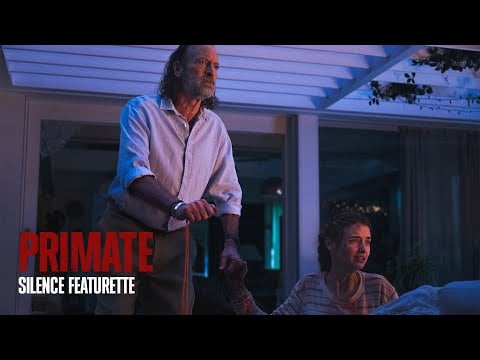
Sometimes a horror film is so gonzo, so full of jaw-dropping kills, that a quip from the crowd can’t hurt. “Primate” is that kind of movie.

Director Johannes Roberts knows this material isn’t Shakespeare. Or even “Jackass.” So he leans into the task at hand with glee.

The result? A lean, and very mean B-movie that leaves a discernible mark.

YouTube Video

The setup is Generic Horror Movie 101, albeit with a stunning backdrop. Young, beautiful people gather to swim, flirt and fight over the same dude.

The affable Lucy (Johnny Sequoyah) is back from college, along with her best gal pal Kate (Victoria Wyant) and Hannah (Jessica Alexander). Lucy’s father (Tony Kotsur) is glad to have his daughter alongside her younger sister (Gia Hunter) again in their luxurious Hawaiian home.

What a backdrop!

Oh, and this particular clan has a very smart chimp named Ben for a pet. When Ben acts strangely in Hannah’s presence, she’s told that the monkey takes time to adjust to strangers.

Seems an important detail to share with house guests, right?

But “Primate” is that kind of movie. It’s deeply silly at times, but the opening sequence sets the macabre tone. Turns out poor Ben’s odd behavior isn’t just a stranger-danger vibe but a sudden case of rabies. The animal’s adorable nature will soon be replaced by rage.

Buckle in.

YouTube Video

Roberts, who cowrote the film with Ernest Riera, sketches out some mildly dramatic conflicts within the main character group. It’s perfunctory at best, but once ol’ Ben loses his cool, the melodrama gets shoved to the background.

This is a creature feature, and the effects used to make Ben go postal are flat-out terrific. No CGI, thank you, but a slick combination of puppetry and stunt work that gives the film a tangible charge.

Those looking for a message within “Primate” will come away empty. This is adrenaline theater, expertly arranged for our amusement. Some plot twists seem forced, while others flow beautifully into the overarching narrative.

One example? 

Casting a deaf performer like Kotsur as the patriarch allows the film to ratchet up the tension at the perfect time. One scene recalls the Netflix original “Hush,” which also featured a deaf protagonist.

Some recent horror films have tried to split the difference, delivering cheap jump scares within a PG:13 framework. Not “Primate.” This film gets nasty, and Ben’s handiwork has a sizable body count.

“Primate” offers some laugh-out-loud tension breaks. The kills also deliver a queasy laugh quotient, akin to a “Terrifier” film where we know what happens next but the anticipation is darkly comic.

And we can’t look away.

Give some credit to Kotsur (always stellar) and the youthful cast. They do more than merely hit their marks. They take wafer-thin characters and make us root for their survival.

Ben does the rest.

HiT or Miss: “Primate” is an adrenaline rush of a horror movie that isn’t afraid to spill some blood.

The post ‘Primate’ Will Drive Horror Movie Fans Bananas appeared first on Hollywood in Toto.


from Movies - Hollywood in Toto https://ift.tt/E1bzmhH
Prepare to Be Bullied by ‘The Plague’

Prepare to Be Bullied by ‘The Plague’

Charlie Polinger’s “The Plague” is the feature-length film debut of the writer/director, who has made short films up to this point.

The film may wind up a calling card that leads to bigger things, as the festival response to the film has been strong.

YouTube Video

The story centers around Ben (Everett Blunck), a 12-year-old boy who joins a water polo team and immediately realizes he is an outcast amongst boys who are aggressive, obnoxious and casually cruel. Jake (Kayo Martin) is Ben’s teammate and is the worst of them.

Jake’s vibrant smile and unceasing sense of humor barely mask a casually sadistic streak and a tendency to lash out at anyone who opposes him. Ben immediately becomes Jake’s target, as Ben is slow to realize that the early taunting and sizing one another up isn’t boys-will-be-boys teasing but an early test.

The title refers to a sadistic game the boys play amongst one another, where they deem the unfavorable one in their midst as having “the plague.” If you disappoint or turn against them, no one will play with you or touch you, but you will be treated as if you have an incurable and highly contagious virus.

This subplot gives the film its title, but the psychological body horror this creates seems like baggage the film didn’t really need.

This intense, Kubrickian drama plays like “Full Metal Jacket” (1987) with middle school boys instead of soldiers. The story eventually becomes so overwrought and heavy-handed, that it strangles the life and humanity out of it.

Even “Lord of the Flies” (William Goldings’ novel or the two film adaptations) had some level of perspective to offer; this film simply drags us through the mud and will only make those of us who suffered through years of school bullying re-live that rotten time.

YouTube Video

The genre shifts from psychological drama into outright body horror, with sharp alterations of tone and approach, is jarring. “The Plague” works best when grounded in reality, but it takes odd dips into outright horror that aren’t fully developed.

Polinger’s film is nightmarish enough without the efforts to explore Cronenberg territory.

The underwater photography is as inventively utilized as it is simply beautiful. Joel Edgerton’s character is a supporting turn – he’s solid as usual as a kind-hearted coach, but the film belongs to its young cast, who are all excellent.

Many scenes are impactful, due to the suspense of not knowing whether we’re about to witness the young protagonist breaking through and building a friendship or if it incites another violent altercation.

From the way there is no visible security ever in sight and how clueless or willingly ignorant the coach is regarding the safety of his group; the story seems contrived to hurt us and doesn’t play fair.

“The Plague” is an accomplished work, particularly in the way it sustains unease and suspense, but it all spins out of control in the same manner the protagonist does at the end. The ending is pat and inconclusive, a better example of the director’s capabilities than his way to properly conclude his tale.

The story has so many unresolved aspects, such as the truth about the title (is the plague a real threat or not?). So much of this plays like a self-conscious art movie.

Polinger can stage potent drama, but the end result is kind of like being bullied – you walk away from “The Plague” feeling sucker punched and little else.

Two Stars

The post Prepare to Be Bullied by ‘The Plague’ appeared first on Hollywood in Toto.


from Movies - Hollywood in Toto https://ift.tt/dNGv7EP
‘Sentimental Value’ Features Four Oscar-Worthy Turns

‘Sentimental Value’ Features Four Oscar-Worthy Turns

“Sentimental Value” is a Norwegian drama that centers around Gustav Borg, a celebrated filmmaker and father figure (Stellan Skarsgård) who has three crucial relationships with his daughters, though only two of them are blood relatives.

Gustav’s daughter Nora (Renate Reinsve) is a professional actress who, in the suspenseful opening sequence, is having a panic attack moments before a stage production begins.

Gustav’s other daughter, Agnes (Inga Ibsdotter Lilleaas) is tired of her father’s lifelong tendency to put his work before his family. Then there’s Rachel (Elle Fanning), an American actress who is thrilled to be working with Gustav and doesn’t have the history and heartache that his two daughters carry.

By the film’s end, Rachel is an equally crucial figure in Gustav’s life.

YouTube Video

Director/co-writer Joaquim Trier’s film is about the story we’re watching and the film that Gustav is trying to put together. There’s a nice back and forth between the story and the art that inspired it, creating a proper extension of the narrative we’re witnessing.

Trier has made more stylish films than this, but there are individual sequences (like a pivotal beach gathering and the one-on-one confrontations with the daughters) that are splendid.

I preferred Trier’s “The Worst Person in the World” (2021), as it was more inventive and also showcased a fantastic lead turn by Reinsve.

Nevertheless, “Sentimental Value” is such a compassionate and gorgeously performed film that it makes a companion piece with Trier’s prior film. It stands alone as a moving depiction of how art can build a career but ruin a family dynamic.

There’s so much here that is richly explored and deeply compassionate, a family drama that aims to enlighten and, unlike many similar Oscar hopefuls this year, not beat us down with look-at-me acting and shameless histrionics.

YouTube Video

The acting is unforced and affecting, to a point I had to remind myself that I was watching actors and not a documentary. No kidding, the performances are so persuasive, it’s easy to lose yourself to the characters when the portrayals are this vivid and nuanced.

The four lead turns are flawless. Reinsve’s performance might just be the best I’ve seen this year, though Lilleaas is also fantastic. There’s something special about the scenes between Fanning and Skarsgård, who is also giving a performance that is among his most vivid and layered.

Between this and her wonderful movie-stealing performance in “Predator: Badlands,” Fanning is touching in her willingness to play characters who are open books and utterly fragile.

“Sentimental Value” reminded me of Bergman in its silence, focus on character above all and capturing moments of beautiful spaces and the triumph that arises from surviving our hardest moments.


View this post on Instagram


A post shared by Sentimental Value (@sentimentalvaluefilm)

It’s clear from the start how the film must end, and the final scene is very special. Still, I wanted the story to keep going. Perhaps this is an indication of how much I enjoyed Trier’s film, but it can also mean that I found that not enough was resolved by the third act.

Sometimes movies end exactly where they should – I admired Trier’s choice to conclude his film with perhaps the film’s most complicated shot, but I still wanted more from the story. Whereas some films find the perfect moment to wrap things up, I felt the ending here is satisfying at face value but in hindsight, inconclusive.

Not every story thread is properly addressed – I feel like young Erick and his father are neglected subplots. Yet, the level of the performances ensures that you feel every scene. Nevertheless, wanting a film that runs 133 minutes to go on longer and spend more time with its cast is probably an indication of how much I enjoyed “Sentimental Value.”

Three Stars (out of four)

The post ‘Sentimental Value’ Features Four Oscar-Worthy Turns appeared first on Hollywood in Toto.


from Movies - Hollywood in Toto https://ift.tt/gaYu4tp