# a b c d e f g h i j k l m n o p q r s t u v w x y z
Bury ‘Mike & Nick & Nick & Alice’ in Time Capsule

Bury ‘Mike & Nick & Nick & Alice’ in Time Capsule

Time travel films can be exhausting.

The logical threads are often tough to untangle, and the gimmick gives screenwriters too many cheat codes. It’s why 1985’s “Back to the Future” remains a marvelous slice of time travel perfection.

“Mike & Nick & Nick & Alice” can’t come close to that standard. It’s the opposite, a frantic attempt at dark humor laced with endless action sequences.

A very game cast takes a smart approach to the material, but the further the story goes along, the less engaging it becomes. The film should make like a tree and get out of here.

YouTube Video

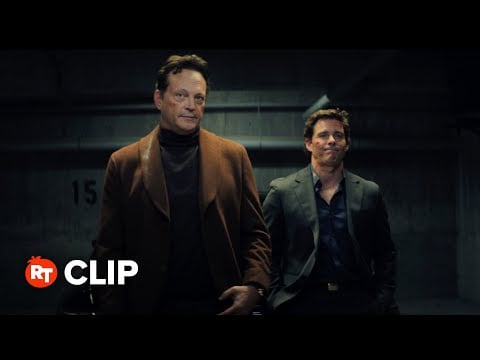
Thuggish Jimmy Boy (Jimmy Tatro) is celebrating his return from prison, and his crime boss pappy Sosa (Keith David) wants to know who framed him in the first place.

The trail leads to Mike (James Marsden), but his friend and associate Nick (Vince Vaughn) has a plan to save him from doom. Even though Nick set this dangerous game in motion by naming Mike the rat.

Our Nick stumbles upon a time machine that allows him to go back in time to prevent Mike from getting whacked and erase his mistake. Or, at least that’s the idea. Endless complications erupt, from having two Nicks bumping into one another to Mike trying to keep his affair with Nick’s wife, Alice (Elsa González), a secret.

Confused? You should be, but writer/director BenDavid Grabinski keeps things cohesive enough to follow what’s happening from scene to scene.

It’s just not worth the effort.

YouTube Video

Let’s put aside the ugly morality behind the film. These are all criminal characters made to seem warm and fuzzy, another ethical loophole in Hollywood’s woke agenda.

(You can’t make DudeBro comedies about entitled white frat boys, but you can humanize contract killers).

Grabinski’s script is littered with pop culture references, and it takes a deft hand to weave them seamlessly into a story like this. That hand, alas, is missing.

It’s fine that the script gives quirks to key characters, minor notes that often bespeak a film’s depth. That said, each idiosyncratic tic shouts its existence.

The film’s endless needle drops can’t save the story, either, and they, too, announce themselves in crude fashion. Look, Ma, this ’90s ditty is gonna make everything in “Mike & Nick & Nick & Alice” better. Trust us!

Not even close.

“Mike & Nick & Nick & Alice” features a few fun cameos by old pros, but their presence can’t fix the story’s sizable flaws. That goes double for the Mike-Alice love connection. That should steer the story in an even darker, more impactful direction. Instead, it’s treated with a shrug.

Sorry, mobsters aren’t this evolved in their emotional lives. 

What’s left? A story that’s cobbled together from generic blockbusters and Tarantino tics without the heart or humor to make them pop. If the film’s sequel tease holds, we’ll build a time machine to stop this misfire from happening in the first place.

HiT or Miss: “Mike & Nick & Nick & Alice” gives a game cast little to do save chase each other through some allegedly wacky paces.

The film debuts March 27 on Hulu/Hulu on Disney+

The post Bury ‘Mike & Nick & Nick & Alice’ in Time Capsule appeared first on Hollywood in Toto.


from Movies - Hollywood in Toto https://ift.tt/TohkjBR
’15 Days’ Will Makes You Furious at Teachers Unions

’15 Days’ Will Makes You Furious at Teachers Unions

15 Days” opens with a political grenade thrown by Jane Fonda.

“COVID-19 is God’s gift to the Left,” the Oscar winner says with a girlish giggle.

That she said something like that aloud is shocking, but she wasn’t alone.

The documentary, subtitled “The Real Story of America’s Pandemic School Closures,”  has more chilling sound bites, along with an army of parents who share their outrage over the lockdowns.

Most parties admit said lockdowns were a mistake in retrospect. The media eventually ‘fessed up on the subject, too, noting the educational delays sparked by the decision. It’s still vital to relive this awful chapter in U.S. history, something “15 Days” does to fine effect.

It isn’t as splashy as a typical Hollywood documentary, but the film has the facts, and outrage, on its side.

YouTube Video

The story begins in March of 2020, a time when the first of many schools shuttered to “stop the spread.” The government told us to take a knee for two weeks, and life would return to normal.

Americans dutifully obeyed. And that’s when the madness began.

The film touches on media bias, noting how Legacy Media outlets promoted fear over facts for months on end. Meanwhile, a small group of scientists, educators and parents began questioning the efficacy of the lockdowns.

The “science” didn’t add up to them. Countering the COVID-19 narrative fueled more than just cultural blowback. You were a racist, for starters. Or simply part of the MAGA movement.

Some faced death threats for suggesting alternative points of view. And that was before Social Media, Inc. started to censor views that questioned mainstream narratives, like the Great Barrington Declaration.

That’s a story for another documentary, but “15 Days” shares enough of it to paint the bigger picture.

Obey or else.

For some parents, their red-pill makeovers began during the George Floyd riots. Wait, they collectively asked, we can’t go to church or send our kids to school, but BLM protesters could march, side by side, with the government’s approval?

Parent after parent watched as the U.S. Government gave the “all clear” sign to race-based protests while their children struggled to learn something, anything at home.

Suddenly, the science didn’t add up, and you didn’t need a master’s degree in biology to see it.

“15 Days” wears its modest budget with pride. Director Natalya Murakhver does double duty as our on-camera  guide, patiently walking through the era’s most enraging elements. She’s not flashy or charismatic, but her stoic delivery cuts to the bone.

There’s plenty to be furious about vis a vis pandemic overreach, but the film keeps the focus on children. We see some share their stories, how they missed out on athletic glory or simply wished they could learn with their friends.

The documentary doesn’t overplay this hand, but their small voices prove essential.

Fonda may be a convenient punching bag, rhetorically speaking, but the film’s true villain is Randi Weingarten. The long-running President of the American Federation of Teachers (AFT) helped keep kids out of school indefinitely during the COVID-19 crisis, bouncing from one softball media interview to the next.

Weingarten was the ultimate culture warrior, hoping to use the pandemic to steer even more cash to teachers unions and push her radical, far-Left agenda.

Social Justice. Environmental Justice. BLM. But what about the kids?

They got left behind, and the lack of accountability is enraging. Still.

Many teachers happily did Weingarten’s bidding. One featured in the film spoke out against in-person classes but shared her vacation snaps on social media. Others happily displayed their BLM flags in classroom Zoom sessions.

Get the picture?

“15 Days” doesn’t lean into a Left-Right narrative. Some clips of President Donald Trump in the early days of the pandemic are wince-inducing, especially as he’s flanked by Dr. Anthony Fauci and Dr. Deborah Birx. Still, it’s clear which party mishandled the lockdowns and weaponized them for their benefit.

Better check your blood pressure medicine before watching “15 Days.” But watch it we must.

HiT or Miss: “15 Days” shows the ghoulish choices Teachers Unions made to keep kids out of school during the COVID-19 pandemic. 

The post ’15 Days’ Will Makes You Furious at Teachers Unions appeared first on Hollywood in Toto.


from Movies - Hollywood in Toto https://ift.tt/jcA4yeg
‘A Scanner Darkly’ Predicted Our Paranoid Age

‘A Scanner Darkly’ Predicted Our Paranoid Age

Richard Linklater’s “A Scanner Darkly” (2006) begins, “Seven years from now, Anaheim, CA.”

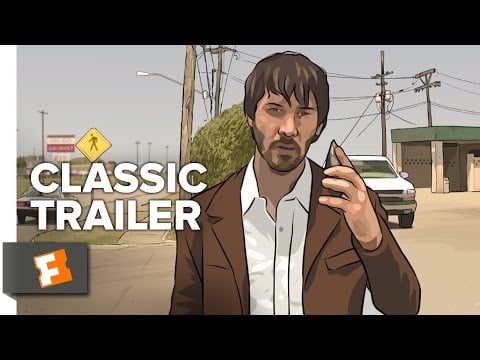
A rotoscoped animated film based on the 1977 sci-fi novel by Philip K. Dick, Linklater depicts the somber tale, lifted partly from Dick’s real-life experiences living with junkies, in a fitting visual tapestry that fully connects with the feeling of detachment in this environment.

YouTube Video

The first scene sets the tone, as we witness Rory Cochrane’s character being swarmed with arachnids that he can’t wash off. Even his dog is full of these bugs, which he helpfully puts in a jar and realizes later that they are a figment of his imagination.

Watching Cochrane struggling to shower off a horde of insects is, like everything that follows, hilarious, gross and kind of sad.

Fred, played by Keanu Reeves, is a junkie who speaks in a public forum wearing a “Scramble Suit,” which makes his appearance blurry and impenetrable. Donna, Fred’s friend (Winona Ryder) brings him into a cluster of other junkies, played by Robert Downey Jr., Woody Harrelson and Cochrane. They all have something to hide but seem disinterested in the truth.

They care more about spreading conspiracy theories and staying inebriated.

What transpires is an anti-drug film that doesn’t wallow in excess nor rub our faces in melodrama. Instead, the stark honesty in the screenplay and performances make it feel immediate and unforced. The cell phones the characters use are big enough to suggest the early 2000s. Otherwise, this could be right now.

The Scramble Suits are a dazzling concept that the animation turns into a hypnotic effect. It’s hard to imagination this working as a live-action film, even with the advances in CGI.

Prior to his late-career “John Wick” career boost, Reeves floated through a series of roles that were interesting but not always a good match for him. Here, Reeves finds the pathos of the role and is every bit as good as Downey Jr. and Harrellson, whose performances are showier but no less layered.

Rather than getting overshadowed by the animation, the film connects because the performances and the animation are working simultaneously; this is easy to understand when looking at Robin Williams’ performance in “Aladdin” (1992), for example, but it’s just as impressive here.

The animation elevates the work and the choices of actors who are committing to Dick’s harrowing sci-fi cautionary tale.

Linklater’s prior film with roto-scoped animation, “Waking Life” (2001), was a brilliantly constructed and conceived work that depicted the dream state in episodic fashion, with every segment done in a different style of animation. Here, “A Scanner Darkly” has a consistent look to the animation in every scene.

The overall result isn’t an experimental film, like “Waking Life,” but a top-to-bottom repurposing of how animation can be used to tell a narrative not intended for children.

Rather than utilize busy CGI to convey the scramble suits on live-action stars, Linklater makes it all a cartoon, which complements the performances (the characters are all spacey to begin with) and the scenario (the futuristic tech of this world doesn’t seem like an intrusion on the reality within the story).

FAST FACT: Linklater told Aint It Cool News that he wanted to ensure the source material’s comedic elements made it into his film. “…often an element that has been lost in his works that have been adapted to film is the humor. You see bits and pieces of it but that’s it.”

Linklater is one of the truly brilliant American filmmakers working today, as he finds ways to challenge himself and his audience. The let’s-take-years-to-make-this conceit of the award-winning “Boyhood” (2014) and the three-people-in-a-room drama “Tape” (2001) are just two examples of how the filmmaker takes calculated risks that work to the narrative’s benefit.

I realize I’m not doing a good job selling “A Scanner Darkly” and haven’t noted how funny, inventive and wildly entertaining it is. The final scene is a heartbreaker and fittingly sit to Thom Yorke’s great “Black Swan.”

There are scenes here that are crushing but, unlike so many cautionary tales that aim punish above all else, Linklater and his cast clearly love these characters, flaws and all.

It’s a little crazy to me that, 20 years later, “A Scanner Darkly” is an unseen, obscure masterpiece. There were many great films released in 2006 but this one was my favorite.

The post ‘A Scanner Darkly’ Predicted Our Paranoid Age appeared first on Hollywood in Toto.


from Movies - Hollywood in Toto https://ift.tt/HosMce0
‘Ready or Not 2: Here I Come’ Should Stay Hidden

‘Ready or Not 2: Here I Come’ Should Stay Hidden

Some movies don’t deserve a sequel, but the box office potential screams otherwise.

It’s hard to stare at a surprise hit like 2018’s “Ready or Not” and say, “yeah, one is enough.” That’s exactly what the team behind the film should have said.

Instead, we get “Ready or Not 2: Here I Come,” a sequel that squanders all the goodwill built up the first time around. Every last ounce of it.

Original star Samara Weaving isn’t to blame, nor is Kathryn Newton as a key addition to the saga. It’s a world-building exercise that goes nowhere, compounded by clunky dialogue and endless exploding bodies.

Yes, the latter bit is comical the first and second time, but the tenth?

YouTube Video

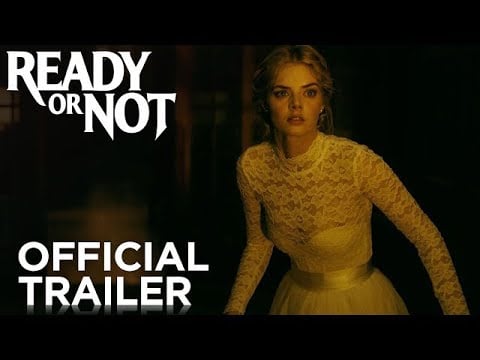
The action picks up where the last film ended. Weaving’s Grace is still wearing her bloodied wedding dress, and local law enforcement thinks she may be responsible for all the dead members of the Le Domas family.

Her estranged sister Faith (Newton) visits her in the hospital where Grace, chained to the bed while recovering from her wounds, awaits the long arm of the law.

It doesn’t take long for the bigger story to emerge. Grace’s unlikely victory in the first film was just the beginning. Turns out that evil, uber-rich clan was part of a larger network of Satan-worshipping gazillionaires.

Dern that capitalism!

To be fair, the film’s satirical swipes never devolve into lectures and an early quip about geopolitical power. It’s merely the backdrop to the unfolding mayhem.


View this post on Instagram


A post shared by Ready Or Not (@readyornotfilm)

Grace and Faith are quickly captured and brought to a new mansion where the various families will try to kill her. If at first, you don’t succeed, we suppose.

She’s not exactly G.I. Jane, but she is scrappy and managed to survive the first film, so…

Whoever finally kills Grace will become the most powerful person in the world, or head of the high council, or something similarly Satanic and absurd.

The story is beyond ridiculous, and attempts to expand the “Ready or Not”-iverse reminds us of the superior “John Wick” saga. Those films have star power (Keanu Reeves), expert fight choreography and a stellar sense of mayhem.

“Here I Come” has Weaving, a terrific Final Girl, and little else. The action is frantic and lackluster, while the dialogue feels like it was written by teen boys who spend every waking hour playing Fortnite. Cursing abounds, and while R-rated films aren’t delicate by any stretch, the flop sweat screenplay screams straight-to-VOD fare.

The 2019 original, while no classic, deserves better than this.

YouTube Video

The crowded story includes Sarah Michelle Gellar and Shawn Hatosy as siblings hoping to emerge victorious, even though they’re often too busy squabbling with each other.

The various characters gunning to kill Grace and Faith aren’t exactly fearsome or memorable. The former isn’t a deal killer since comedy is allegedly part of this cinematic dish. Except the laughs are infrequent and the endless gore feels desperate, not inspired.

A running subplot concerning Grace and Faith’s strained past is meant to build up their characters, but it’s so perfunctory it merely slows the film’s admittedly kicky momentum.

The sequel isn’t dull, just stupefying.

“Here I Come” is a mess from the very first scenes, an ill-fated attempt to stretch a quirky genre hit into a franchise.

HiT or Miss: “Ready or Not 2: Here I Come” boasts a snarky title, a game lead actress and little else.

The post ‘Ready or Not 2: Here I Come’ Should Stay Hidden appeared first on Hollywood in Toto.


from Movies - Hollywood in Toto https://ift.tt/ZLqkPmC
Original ‘Highlander’ Is Still a Glorious Mess

Original ‘Highlander’ Is Still a Glorious Mess

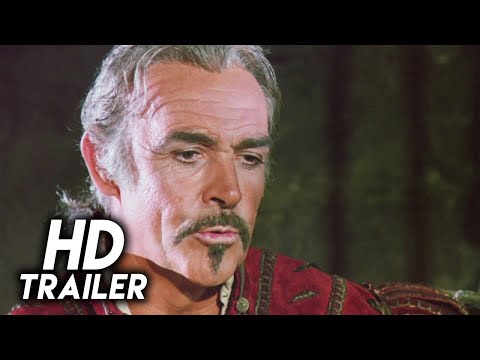
Russell Mulcahy’s “Highlander” (1986) begins with an awesome opening crane shot.

The camera spins around a packed Madison Square Garden crowd during a wrestling match, swoops upward into the cheap seats and finds our main character sitting by himself.

The protagonist is Connor MacLeod (Christopher Lambert), a handsome, intense man wearing a trench coat. We follow the suspicious-looking Connor as he cautiously enters the parking garage below, where he encounters a sword-wielding assassin.

Connor, not to be outdone, is also carrying a sword and the two engage in a blade battle of mythic proportions.

YouTube Video

The garage fight opener is quite the set piece, complete with clanging swords, exploding cars and, of all things, multiple backflips. From the first scene on, it’s clear that Aussie director Mulcahy (whose prior film was the 1984 Outback killer pig thriller, “Razorback”) is really going for it.

The introductory swooping camera moves, flying across a wrestling arena and finding Lambert in the audience, are unnecessary but electrifying.

The scene is like the film overall: goofy, overdone and thrilling. Yes, it’s style over substance, but the showmanship is undeniable.

Connor MacLeod is an antique dealer in the late 1980s, with an accent that suggests a colorful background. We know from flashbacks that he is an immortal who originated from the Scottish Highlands. After losing a battle with a ferocious warrior called The Kurgen (Clancy Brown), Connor miraculously heals, is deemed a monster by those who saw him mortally wounded and flees his village.

While out in the wilderness, Connor falls in love and is mentored by Sanchez, played by Sean Connery, who, curiously, isn’t playing a Scotsman but an “Egyptian Spaniard.” In a film about mystical Scotsmen, Connery, arguably the most famous Scottish actor ever, has been absurdly cast as “Juan Sanchez Villa- Loboz Ramirez.”

Um, okay.

“Highlander” is utterly confusing if you’re seeing it for the first time. Thinking back to my initial viewing on HBO during the 1980s, I was delighted by the mayhem and showmanship but found the story dreamlike and vague. Screenwriter Greg Widen is taking on the vampire legend, something he did in a different way later on with his angels vs demons “The Prophecy” (1995), another cult film.

Oddly enough, despite multiple viewings, three sequels and a long-running TV series, I still find “Highlander” a dense chore to discuss on the story level. Another puzzling detail: despite the many sequels and spin-offs, the main characters are constantly reminding us that There Can Only Be One.

Indeed…until the next one.

The Michael Kamen score and Queen songs are, in a word, awesome. Mulcahy leans into comic book-like transitions and reflections, a perfect touch. The flashbacks are flush with gorgeous location shots. While Mulcahy’s career never rose to the level of Ridley Scott or Luc Besson, this film and his later “The Shadow” (1994) indicate he had a keen eye for rich detail and grandiose storytelling.

Mulcahy’s ’86 box office flop became an in-demand rental and cable favorite, leading to three mostly unloved sequels (I have a soft spot for the uneven but robust “Highlander: Endgame” from 2000), the 1992-1998 Adrian Paul-led TV series and the forthcoming Henry Cavill-led remake.

It’s not hard to see why Russell Mulcahy’s “Highlander” bewildered audiences in theaters but gradually found a ravenous cult following afterwards. While an instant bomb and a real oddity in theaters, Mulcahy’s Scottish-infused update of the vampire legend gained serious traction on VHS and repeat cable airings.

Whatever it was that lured movie lovers to this goofy epic (Connery, the music of Queen, the sword and shield fantasy genre, etc.), most were able to accept the far-out premise of immortal warriors in century-spanning battles and took it at face value.

Through a series of flashbacks, we witness McCloud’s education on the ways of the Highlander by Connery’s character and get glimpses of the several lifetimes he lived through. McCloud’s relationship with a nosy reporter (an appealing Roxanne Hart) causes him to ponder settling down, though we know what happened to the last lady who stuck with McCloud until the end.

Connery is the film’s secret weapon. Lambert has a strong presence, but he can’t carry this by himself. Nevertheless, the former, original and arguably greatest 007 brings his expected gusto, 100-watt movie star presence and professional dedication to a movie that doesn’t fully deserve him.

You can never quite believe Connery in the role, but his charisma is so razor sharp, it doesn’t matter. He’s the best special effect here.

I realize I haven’t mentioned a key detail: the only way to kill immortals is to chop their heads off with a sword. It begs this question: if this is the only way these guys can be killed, wouldn’t they invest in a steel neck brace to wear in public?

As always, the dependably wonderful Brown is solid, but The Kurgen is a bit much. He’s more of an annoyance than a compelling character and you count the minutes until he finally gets his comeuppance. Mulcahy sometimes indulges in Terry Gilliam-esque fish-eyed lenses, which is too much for a movie already overflowing with flamboyant touches.

The screenplay, while ambitious, is ridiculous, and the dialogue is even worse. “Highlander” aims for a comic book feel but the lines are consistently dumb. While I can’t get behind any of the sequels that followed, it’s worth noting that the subsequent “Highlander – The Series” effectively infused this with the scope, seriousness and sense of fun the movie doesn’t always reach.

Purely as a cinematic experience, it’s an addictive action movie. The sweeping camera moves, Queen’s soaring tunes and the excellent swordplay sequences elevate it. Little of this pulled me in emotionally (aside from a nice subplot involving McCloud’s saving a little girl), but the visuals are so awesome, it works as ’80s mythmaking.

The post Original ‘Highlander’ Is Still a Glorious Mess appeared first on Hollywood in Toto.


from Movies - Hollywood in Toto https://ift.tt/qMXytzl
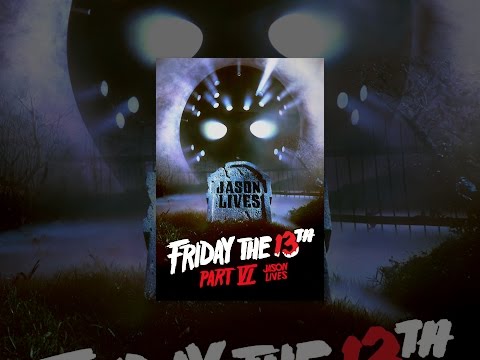
‘Friday the 13th Part VI: Jason Lives’ Makes Murder Fun

‘Friday the 13th Part VI: Jason Lives’ Makes Murder Fun

You have to have a sense of humor to see a film called “Friday the 13th Part VI – Jason Lives.”

It also helps to have a sense of humor to make a movie like this. Thankfully, both the film’s writer/director, Tom McLoughlin and its studio, Paramount Pictures, clearly found something very funny about Jason Voorhees.

Not funny enough to turn the character into a murderous quipster (which New Line Cinema did to Freddy Krueger) but funny enough to finally make a movie that kids its audience, lets them share the joke and find laughs by not taking everything so seriously.

YouTube Video

Shaping the sixth Jason Voorhees slasher movie into more of a dark comedy than a horror film gave fans something refreshing. This isn’t contempt for an audience but a thank you for everyone who kept this artistically sketchy franchise alive for six years.

It ain’t art, and its definitely not a great horror movie, but “Jason Lives” is something special. Yes, it’s as gross and juvenile as ever, but by doing it with a smile on its face, the movie succeeds as a guilty pleasure and is one of the best in the series.

The story so far: the thought-to-be-drowned Jason Voorhees has been hacking n’ slashing camp counselors who desecrate his beloved Camp Crystal Lake with sex, drugs and bad 80’s fashion statements. Two movies prior, a little boy named Tommy Jarvis managed to out-think and cut Jason into ribbons.

Unfortunately, this led to Jarvis himself being institutionalized. At the beginning of “Jason Lives,” Jarvis (Thom Mathews) and a fellow Cuckoo’s Nest escapee (none other than Ron Papillo, Horshack from “Welcome Back, Kotter”) go to Jason’s grave to make sure he’s dead.

They dig up his bones, Jarvis has a moment of anger and, in a touch Mary Wollstonecraft Shelly herself would have appreciated, Jason is brought back to life by a bolt of lightning. This pre-credits sequence is a kick – it’s intentionally funny, mildly spooky and ends with gobs of gore.

Then there’s the title sequence, in which Jason enters the screen in a James Bond-like fashion. It’s all very stupid and I’m not defending any of this as art. At the same time, it’s thoroughly entertaining and gives the fans a refreshingly tongue and cheek (and other detached body parts) approach to a worn-out tale.

Mathews is so good in this, and he manages to upstage a stunt man dressed as Jason. Mathews’ intensity is the driving force of his performance, and he’s well matched by Jennifer Cooke as the gruff sheriff’s daughter.

She’s plucky and adorable, though it’s worth noting that even David Kagen, playing the no-nonsense sheriff, is better than expected. These aren’t Oscar-caliber performances, but the actors are really giving it their all, which can’t be said of the previous “Friday the 13th” entry.

YouTube Video

McLoughlin does what is expected and then some. There are a few lame stalk n’ scare scenes, lots of cheap jump jolts, many moments of teens being teens, one impaling after another and by-the-numbers ’80s horror movie tropes.

There’s also an awesome highway crash-up, a great climactic showdown on Crystal Lake (as opposed to “On Golden Pond”) and an end-credits Alice Cooper song that seriously rocks. The only quality strangely in short supply: gratuitous nudity.

On the other hand, this is the first “Friday the 13th” since the first one that I would describe as atmospheric, eerie, and funny on purpose.

There’s also a shot of a little girl in her cabin, surrounded by sleeping campers. She’s awake and sees Jason walking around outside. No, the movie doesn’t subject us to Jason offing any children (remember folks, he’s a man-child and only goes after teens old enough to see his movies).

FAST FACT: FX guru Tom Savini baked some of the prosthetics for the first “Friday the 13th” film in a pizza oven.

Yet, the shot of the little girl, suddenly jolting up in her bed, scared by the “boogeyman” outside, packs a punch. It might be the one shot in the entire franchise that haunts me. It’s also the essence of why these movies work.

These are campfire tales, chilling in the dark but utterly ridiculous once the sun comes up.

This and “April Fool’s Day,” were Paramount’s unofficial, ahead-of-their-time horror comedies from 1986. They’re both better than expected (“April Fool’s Day” is actually far better than merely good) and, for fans of the genre, they rank pretty high.

When a movie starts with a 007 homage and ends with Alice Cooper singing about Jason over the end credits, it’s hard not to crack a smile.

Happy Friday the 13th, Jason. See you next summer.

The post ‘Friday the 13th Part VI: Jason Lives’ Makes Murder Fun appeared first on Hollywood in Toto.


from Movies - Hollywood in Toto https://ift.tt/5XgCjIU
‘Reminders of Him’ Has Perfect Secret Weapon

‘Reminders of Him’ Has Perfect Secret Weapon

Mainstream movie romances have set requirements.

Predictability. Comfort. No character’s edge can be too unforgiving, even if it seems like it on the surface.

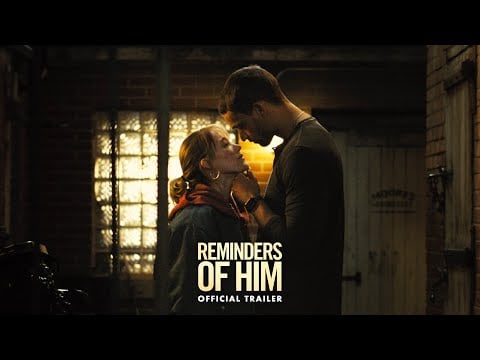
“Reminders of Him” follows that format to a T. The film, based on Colleen Hoover’s bestseller and co-written by the novelist, understands the assignment perfectly.

The wild card? Star Maika Monroe’s face, an instrument capable of endless shades of pain, discomfort and, eventually, joy. Her performance turns even mediocre scenes into consequential turns.

And her on-screen partner, played by Tyriq Withers, holds her own while anchoring the film’s masculine component. (He even uses nail polish after a youngster playfully paints his fingernails)

YouTube Video


Kenna (Monroe) moves back to her late lover’s hometown of Paradise, Wyoming. She’s fresh out of jail after a seven-year sentence.

Why?

She was driving her beau Scotty (Rudy Pankow) home when their car crashed, injuring her and killing him. And she had drugs in her system and left the scene of the crime while he was still alive.

Now, she wants to rebuild her life and, far more importantly, see the daughter she gave birth to in prison for the first time.

Good luck. Scotty’s parents (Lauren Graham, Bradley Whitford) adopted young Diem (Zoe Kosivic) and want nothing to do with Kenna. They haven’t even told the five-year-old about her, beyond a silly lie about her needing a bigger car to visit.

YouTube Video

Fate brings Kenna into a bar run by Ledger (Withers), a former Denver Broncos player. Ledger was Scotty’s best friend, but he never got to meet Kenna due to his busy NFL schedule.

When the two meet early in the film, sparks fly (and then some). Ledger’s ties to Scotty run deep. He took on a sizable role in young Diem’s life, serving as a father figure of sorts while Mom served her prison sentence.

See where this is going? We all do, and that’s understandable. We need to watch the story pieces fall into place and feel some emotional pull in the process.

That’s more or less what happens.

Monroe is best known for turns in strong horror entries like “It Follows” and “Longlegs.” Here, she’s doing the opposite of what Claire Danes might attempt, at least if you’ve seen the latter in Netflix’s new series “The Beast in Me.”

Monroe makes the quiet creative choice in every scene, expressing pain in small gestures and facial movements. Sure, she’s movie-star beautiful, but the pain etched in her performance is profound.

Director Vanessa Caswill keeps the mood civil, albeit heartbreaking, with only two jarring exceptions. One is a bizarre, post-coital exchange that could have been black humor on steroids, but it stops the movie cold. The film’s third act reveals are unnecessarily tidy, but the cast handles the rough spots as well as could be expected.

Still, Caswill’s light touch is mirrored by the leads, who understand the story’s heft and refuse to double down on sticky sentiment.

Other gentle touches are more than welcome, like a crisp supporting turn from Monika Myers as a fellow motel dweller. A running gag about a “freakin’ pigeon” is cute at first but overstays its welcome.

It’s hard to escape a formulaic romance without a dash of cringe.

That “Reminders of Him” steers mostly clear of those speed bumps, and delivers the heart-tugging moments so well, it means the film missed its Valentine’s Day release date by a month.

HiT or Miss: “Reminders of Him” makes a few tonal mistakes but otherwise delivers the kind of romantic pairing that’s tailor made for the big screen.

The post ‘Reminders of Him’ Has Perfect Secret Weapon appeared first on Hollywood in Toto.


from Movies - Hollywood in Toto https://ift.tt/Jig1TCv
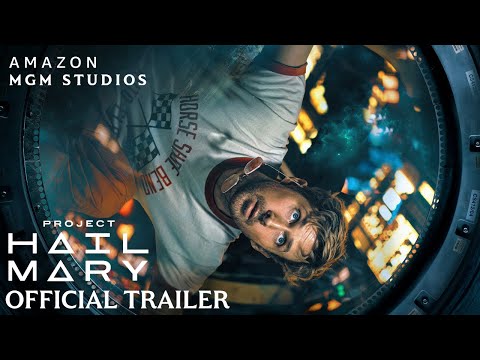
‘Project Hail Mary’ Takes Aim at A.I. Slop, Sequelitis

‘Project Hail Mary’ Takes Aim at A.I. Slop, Sequelitis

Sequels. Prequels. Reboots. Re-imaginings. Spinoffs. Shared universes.

And, of course, the rise of A.I. slop.

We’ve grown numb to films that look and feel all too familiar, and we often flock to see them anyway. It’s almost like comfort food – safe, reassuring and bland. Along comes “Project Hail Mary,” and it’s a course correction of the first order.

The story, based on the novel by Andy Weir of “The Martian” fame, packs so much humor, heart and humanity into its two-plus hour running time that it feels dizzying. That’s above and beyond the superlative turn by star Ryan Gosling.

There’s enough originality from directors Phil Lord and Christopher Miller (“The LEGO Movie”) to fill a dozen movie theaters. And here we are, eager to savor it in one, admittedly overlong bite.

YouTube Video

Gosling stars as Ryland Grace, an aw, shucks biology teacher pressed into the most unusual service. Ominous reports are tracking an outer space substance infiltrating the sun.

And, slowly but surely, extinguishing it.

Ryland’s unorthodox thinking got him kicked out of the Science, Inc. community, but a determined international task force leader named Eva Stratt (Sandra Hüller) thinks he might be the one to save the world.

The film’s smart story structure follows Ryland as he tries to crack the crisis from the confines of space. And, along the way, we get rigorously structured flashbacks to show how he got here in the first place.


View this post on Instagram


A post shared by IMAX (@imax)

The storytelling is relentlessly smart, from the strong performances to the way that intricate theories are presented as both bright and accessible. Gosling may be movie-star handsome, but his vulnerability is what sells the character.

He’s a puzzle solver of the highest order, but he isn’t sure he has the heroism side of the equation nailed down. Nor do we, which makes “Project Hail Mary” all the more exhilarating.

The film’s first act is darn near flawless, and we’re absorbed by the quest and its sticky obstacles. Midway through, Ryland learns he’s not alone. That part of the film takes a quirkier path, opening the story up in ways that are fascinating and, to be fair, often trite.

It feels cynical to frame it as such, especially when we’re witnessing a crowd-pleasing film brimming with wit and ingenuity. The film may lose some older viewers here, potentially, as well as those who still haven’t forgiven George Lucas for those blasted Ewoks.

The film’s sturdy structure never fades. In ways, it only grows richer.

FAST FACT: Author Andy Weir landed work as a lab assistant at Sandia National Labs, a Department of Energy installation, when he was just 15.

The special effects are as stunning as we’ve come to expect from mainstream Hollywood, but there’s something grounded about the presentation. The FX crew isn’t trying to dazzle or distract us. The ship in question feels as grounded as the Nostromo from “Alien,” a very high compliment.

The rest hangs on Gosling’s shoulders, and in a wild way, his adventures are similar to those of Tom Hanks and his unusual pal in “Cast Away.”

Yes, “Project Hail Mary” goes on too long, and the third act packs more than a few, “wait, this isn’t the final conflict” moments? It ends on a note that’s graceful and satisfactory, sticking the landing after already achieving so much more than most films ever think of attempting.

Take that, Tilly Norwood!

HiT or Miss: “Project Hail Mary” is messy but moving, a marvel of science fiction storytelling that never leaves the human element behind.

The post ‘Project Hail Mary’ Takes Aim at A.I. Slop, Sequelitis appeared first on Hollywood in Toto.


from Movies - Hollywood in Toto https://ift.tt/mfAgqp4
Why ‘INLAND EMPIRE’ Was Pure, Unfiltered Lynch

Why ‘INLAND EMPIRE’ Was Pure, Unfiltered Lynch

David Lynch’s “INLAND EMPIRE” (2006) begins, fittingly, with a grand gesture.

The spotlight shines on the title, followed by a prelude with a record needle (so the song begins …), blurred black and white footage of a hallway and Polish dialogue.

We see a prostitute and a client with blurred-out faces, then cut away to a character staring at a static TV and crying (not unlike the opening of Lynch’s 1992 puzzle, “Twin Peaks: Fire Walk With Me”). It’s all been shot on digital photography and resembles snippets from our deep unconscious.

You lost yet? Just go with it.

YouTube Video

We meet a Hollywood film actress named Nikki Grace (Laura Dern) who has a bizarre encounter with a stranger (an eerie Gracie Zabriskie) who talks her way into Nikki’s home and gives her a vague but menacing warning.

The Dern/ Zabriskie conversation is eerily like the frightening party exchange between Bill Pullman and Robert Blake in “Lost Highway” (1997).

Immediately after this, Nikki is cast in a project with a promising co-star (Justin Theroux) and a confident director (Jeremy Irons) but a dark truth clouds the proceedings. It turns out this new film has a haunted history and is “based on a Polish folktale and said to be cursed.”

The cast and crew carry on until Nikki starts to find it difficult to tell the difference between her real life and the character she’s playing, as moments on and off the set start to blend together. By the midpoint, Irons lays down the lore and, with that, the audience tumbles down the rabbit hole with Dern and Lynch.

RELATED: HOW LYNCH’S ‘MULHOLLAND DR.’ INVADED OUR DREAMS

As with every Lynch film, I find that a second or third viewing goes a long way to fully appreciating (if not fully comprehending) his work. This was also the experience I had with Lynch’s “Wild at Heart” (1990) and “Mulholland Dr.” (2001), two great but challenging, idiosyncratic and casually surrealistic works that seem impenetrable at first.

Your experience may not be the same as mine, but I initially found some of Lynch’s films off-putting and easy to resist. Giving a second or third look has only enriched my affection and understanding but, again, Lynch’s polarizing films (even his most acclaimed) aren’t for everyone.

I saw “INLAND EMPIRE” on opening day, my birthday in fact, at the great Mayan Theater in Denver, Colo. What I remember most about the experience is that for the first two hours (the running time clocks in at a whopping 180-minutes) I sat close to the screen, wanting to absorb everything.

A few massive jump scares and jarring transitions later, I spent the last hour in the row furthest from the screen. I seemed to have forgotten how terrifying Lynch’s films can be, as there are moments in “INLAND EMPIRE” every bit as jolting as the biggest shocks in “Lost Highway” (1997).

We lost Lynch last year, at the age of 78. Now that his body of work has a beginning and end and “INLAND EMPIRE” represents the final theatrical film release of his career (with the awesome “Twin Peaks – The Return” on Showtime his swan song), what can we make of it?

Is it a self-indulgent folly or on the level with his best films? Actually, yes to both of those questions.

If you’ve never liked Lynch’s work, this won’t be the one to change your mind. Also, if you’ve read this far and have never seen a Lynch film, I recommend starting with “The Elephant Man” (1980) or “The Straight Story” (1999).

Lynch’s true masterpiece is probably the entirety of “Twin Peaks” (the first two seasons from 1990-1991, the 1992 prequel film, then the 2017 Showtime mini-series). Nevertheless, while “INLAND EMPIRE” could have used a severe edit before release and has passages it doesn’t need, its best moments, of which there are many, demonstrate how Lynch’s works were thrilling alive, defiant and personal.
YouTube Video

Arguably, the most infamous moments here are the bits with a family of rabbits (specifically, actors with large rabbit masks on) who sit around and converse while a laugh track accompanies dialogue devoid of humor. These bits play like an existential goof, not unlike Lynch’s “The Angriest Dog Alive” comic strip (they’re still online and worth a look).

That we see this bizarre segment (with Naomi Watts and Scott Coffey among the voices of the Rabbit family) before the story kicks in is a bold touch.

Repeat viewings of “INLAND EMPIRE” are essential, as it’s initially difficult to gauge which narrative we’re supposed to invest in (my take- everything is a subconscious prelude until Dern shows up).

For Lynch completists and adventurous filmgoers, there’s much here to savor, let alone wrap your head around. Fans of “Wild At Heart” will note that the film’s Oscar-nominated MVP, Diane Ladd, has a nutty cameo appearance here as a talk show host (meanwhile, William H. Macy has exactly one line in one very brief scene).
YouTube Video

The title of Nikki Grace’s vehicle, “On High Noon in Blue Tomorrows,” even sounds like it could be an extension of the “Invitation to Love” soap opera that captivated the town of Twin Peaks.

“INLAND EMPIRE,” in the best way, often feels like an extension of the themes within “Mulholland Dr.” Both works contrast the real and unreal, Hollywood gloss and ugly reality and show us something so beautiful, followed by a truly ghastly vision.

These are consistent themes with Lynch’s work.

Of the moments I savor, Julia Ormond has one scary single scene as a suspect being interrogated by a cop. Terry Crews shows up as a homeless man. Oh, and there’s a musical number! Two, in fact. Okay, now I sound like I’m describing a dream.

I’ll conclude with a quote from Lynch’s 2006 book, “Catching the Big Fish,” about how his ideas manifest themselves. The chapter entitled “INLAND EMPIRE” begins this way:

“When we began, there wasn’t any INLAND EMPIRE, there wasn’t anything. I just bumped into Laura Dern in the street, discovering that she was my new neighbor. I hadn’t seen her for a long time, and she said, ‘David, we’ve got to do something together again.’ And I said, ‘We sure do. Maybe I’ll write something for you. And maybe we’ll do it as an experiment for the Internet.’ And she said, ‘Fine.’”

The brief chapter has Lynch recalling how a lengthy monologue became something even bigger. Lynch concludes the chapter with this:

“But it wasn’t until halfway through that, suddenly, I saw a kind of form that would unite the rest, everything that had come before. And that was a big day. That was a good day, because I could pretty much say that it would be a feature film.”

The post Why ‘INLAND EMPIRE’ Was Pure, Unfiltered Lynch appeared first on Hollywood in Toto.


from Movies - Hollywood in Toto https://ift.tt/76ARLqD
This One Thing Separates ‘Arco’ from the Animated Pack

This One Thing Separates ‘Arco’ from the Animated Pack

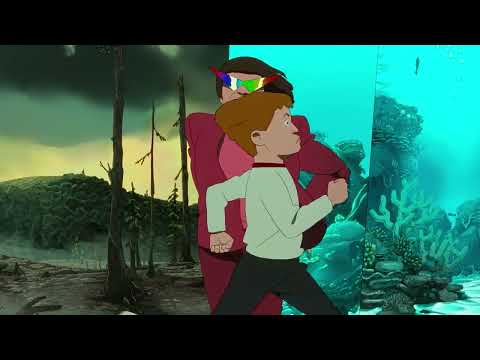
The beginning of “Arco,” Ugo Bienvenu’s wonderful, animated fantasy, depicts the future world of 2932, where citizens live in clouds and time travel is a possibility.

Although time travel is forbidden for children under 12, young Arco (Juliano Krue Valdi) takes a literal leap from an impossibly high platform and tumbles into 2075. Initially, Arco is determined to find a way back home, but finds his journey is complicated by the friendship he shares with a ten-year old named Iris (Romy Fay).

YouTube Video

This gorgeous French animated film is a time travel sci-fi adventure, and a look into a wild, plausible vision of the distant future. It’s also a little bit like “E.T. The Extra-Terrestrial” (1982), but in the best way.

The only real stumbling block is in the needless villains and how they have been adapted for the US audience: Perhaps the trio of villains worked in the French version but, in the English dubbed US version provided by NEON, as voiced by Will Ferrell, Andy Samberg and Flea, the characters are more puzzling and irritating than intended.

The Three Stooges-like villains, all sporting ’80s-style sunglasses and stumbling over one another in every scene, may have clicked in the original version. Finding anything consistently funny for these nitwits to say proves to be a challenge even for the likes of Ferrell and Samberg.

“Arco” is absolutely spellbinding to gaze at, with the hand-drawn animation something truly special in the age of CGI over-saturation.

YouTube Video

Bienvenu’s film resembles a Hayao Miyazaki movie at times and taps into the Studio Ghibli format. More importantly, it makes us care and invest emotionally in this world, even with the dream logic.

It takes the entire film to completely explain that logic and the specificity of the future settings, when a title card could have pulled us in quicker.

Yet “Arco” is rich with the sense of discovery it provides audiences. I was mesmerized by the depth of detail and a willingness to fully engage our imaginations right from the first scene.

It’s surprisingly emotional, with a death scene in the late going that earns our tears. Despite a few intense moments, this is mostly family-friendly. The PG-rating is merited and, unlike the recent “Sketch” (2025), an indication that early grade school kids won’t find it too grown-up or scary.

Finding a good family film to share with your child or children can be difficult. After all, what merits a PG rating, let alone is considered universally appropriate for a young audience, is highly debatable.

This is one of the few contemporary family films that I loved to share with my child and look forward to revisiting again. The beauty of “Arco” is as rich as the emotion and sweetness of the story.

Three and a half stars (out of four)

The post This One Thing Separates ‘Arco’ from the Animated Pack appeared first on Hollywood in Toto.


from Movies - Hollywood in Toto https://ift.tt/4KzedCc
‘Dolly’ Gets Under Your Skin (And Stays There)

‘Dolly’ Gets Under Your Skin (And Stays There)

Dolls are a horror director’s best friend.

Those old-school toys, think porcelain features and glassy-eyed stares, can make grown men think twice about turning off the lights at night.

Director Rod Blackhurst leans into that with “Dolly,” a grindhouse romp with as many flaws as selling points. The latter wins the day, and we may have witnessed the dawn of a new movie monster.

Freddie. Jason. Michael. Art.

Dolly?

YouTube Video

Seann William Scott plays Chase, a single dad who thinks he’s met The One. That’s Macy (Fabianne Therese), who loves Chase but isn’t sure she’s cut out for motherhood.

He takes her on a camping trip so he can propose at the most scenic place possible. A series of dolls elaborately displayed in the woods catches his eye, and he decides to investigate.

No, Stifler, no!

Lurking in the woods is a hulking figure wearing an oversized doll mask. This wordless Dolly (ex-wrestler Max the Impaler in an impressive screen debut) has a shovel and knows how to use it.

Before long, it’s Final Girl time, with Macy trying to stay alive under the worst of circumstances. It doesn’t help that her survival instincts are atrocious, making “Dolly” the kind of film that almost demands audience feedback.

HiT never recommends talking in a movie theater, but …

Blackhurst, who co-wrote the screenplay with Brandon Weavil, has a blast recreating that ’70s horror vibe.

  • The grainy film stock
  • The unexpected musical notes
  • The sequences that feel like outtakes from 1974’s “The Texas Chainsaw Massacre”

The film delights in torturing the poor humans in Dolly’s path, and some sequences simply go on too long. That doesn’t detract from the ick factor, which begins from the very first frame and rarely lets up.

Scott is playing against type, and it’s such an understated turn that it’s heartbreaking. Therese knows the assignment by heart, alternating between victim and resourceful heroine. And boy, can she scream.

Still, the number of times you’ll roll your eyes at Macy’s boneheaded decisions is high.

The third act features some out-of-left-field creative choices that add little to the chills. And some sequences don’t have the impact the creative team likely expected.

Still, this is raw horror at its most unrelenting, a chance to savor throwback genre moves without feeling guilty.

Best of all, Dolly’s mere presence is all the scares the film requires. Those twitching fingers and warped maternal instincts are pure nightmare fuel.

Now, imagine seeing Dolly again … and again.

Stick around through the credits to see if she’s ready for more.

HiT or Miss: “Dolly” isn’t for the squeamish or those who demand a measure of genre consistency. Everyone else will be dialed in from the jump.

The post ‘Dolly’ Gets Under Your Skin (And Stays There) appeared first on Hollywood in Toto.


from Movies - Hollywood in Toto https://ift.tt/YJh2XSP
Woke ‘Bride!’ Feels Like Blast from Cancel Culture Past

Woke ‘Bride!’ Feels Like Blast from Cancel Culture Past

Jeb Bush would like his exclamation mark back, thank you.

Or should we say, “Thank you!”

“The Bride!” goes the full Jeb in ways that remind us of his crash-and-burn presidential campaign. Writer/director Maggie Gyllenhaal goes for broke on her second film, taking Mary Shelley’s classic tome and turning it into a MeToo lecture.

It’s a garishly beautiful lecture, but the film’s core themes are redundant and dull.

Men bad. Women good … and oppressed … and angry.

Sorry. They’re angry!

YouTube Video

When we first meet Ida (Jessie Buckley, the future Bride), she’s stuck in a posh restaurant surrounded by sweaty, arrogant men. The setting? 1930s Chicago, a time when women had far less agency than they enjoy today.

This is what you call foreshadowing.

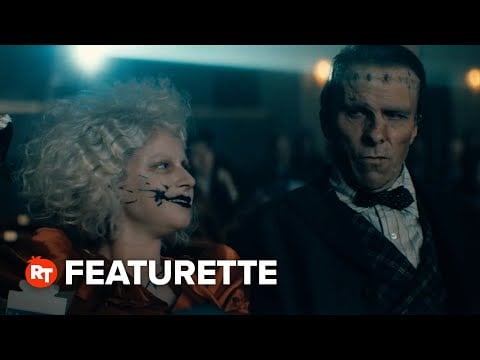
A disagreement leaves her dead at the bottom of a stairway, but that’s just the way Frank (Christian Bale) wants her. He’s a scarred soul stitched together by a mad scientist decades earlier, and he desperately wants a mate.

You can’t blame the guy. 

So he digs up the recently buried Ida and brings her to Dr. Euphronious (Annette Bening). The doctor quickly revives her, but she isn’t sure what her name is or who she was before her murder.

She bonds, to a degree, with Frank (yes, it’s short for Frankenstein), and before you can say, “Bonnie and Clyde,” the two are off on a deadly adventure.

They can’t stop killing those who won’t accept them for their authentic, stitched-together selves. That gets the attention of two detectives (Peter Sarsgaard, Penélope Cruz) who track the pair with some help from their love of feature films.

Confused? Gyllenhaal’s script doesn’t sweat many (any?) details, but suffice it to say “The Bride!” is a love story/monster movie/road trip all in one.

RELATED: ‘FRANKENSTEIN’ LIVES … TO PASS JUDGMENT ON US

The film sneaks in a few pop culture nods, including a giggle-worthy shout-out to “Young Frankenstein.” Boris Karloff’s “Monster Mash” plays over the end credits. And the script slams movie sequels for good measure.

This is a full-on re-imagining a Universal monster with a distinct “Joker” vibe. Or is that “Joker: Folie à Deux?” No matter. The tonal whiplash may require Blue Cross / Blue Shield coverage.

The film channels Shelley in ways we won’t reveal, but know it’s a bold move that doesn’t pay off in the slightest. It does give Buckley even more scenery to chew, and she’d better mainline Ozempic after this performance.

Buckley and Bale act as if every scene is a For Your Consideration closeup. And they scream, boy, do they scream. Sure, they’re monsters in various stages of pain (physical and emotional), but the volume wears on the film.

And us.

One dance number mid-film is a hoot, allowing Gyllenhaal to let loose, visually speaking. And the costumes and makeup are never less than astounding.

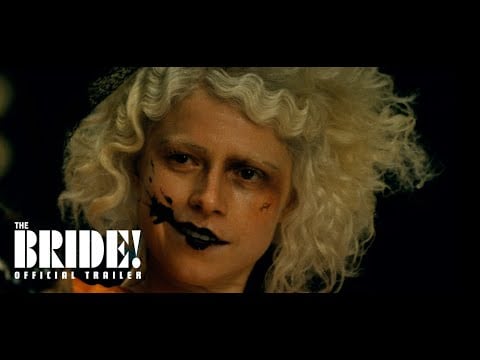
Whoever created the inky stain on The Bride’s face deserves a fat raise. It’s instantly iconic, even if the film can’t come close to that description.

The bigger issue gnaws at the viewer. Are these two misunderstood souls falling in love? Maybe. Partially. But the Bride’s empowerment journey always comes first.

YouTube Video

Gyllenhaal’s feminist agenda starts early and never lets up. Some films treat that subject with care, like 1991’s “The Silence of the Lambs,” which lets us know Clarice Starling’s gender made her unwelcome within the FBI ranks.

Less is more in most cinematic cases. Here, more is decidedly less.

The story’s anachronisms are maddening and inconsistent, and they’re all about pushing an agenda. The phrase “Me too” is literally shouted in case you missed the film’s true north.

Subplots which might have given “The Bride!” heft receive little screen time. There’s a mob boss figure who powers the story, as much of a story as there is, but he’s barely featured enough to matter.

The detectives hot on the monsters’ trail are just as thinly sketched. The actors look alternately bored or bewildered, and Cruz’s story arc is pure cringe. 

It’s hard to knock a film that swings for the fences like “The Bride!” The film just doesn’t measure up to its bold ambitions. The best way to savor it is to bring those fences in until even a pint-sized Little Leaguer could swat it out of the park.

HiT or Miss: “The Bride!” is a messy, madcap love story that looks smashing but eventually wears out its welcome.

The post Woke ‘Bride!’ Feels Like Blast from Cancel Culture Past appeared first on Hollywood in Toto.


from Movies - Hollywood in Toto https://ift.tt/ZehLCqD
‘The Mastermind’ Keeps Director’s Maddening Streak Intact

‘The Mastermind’ Keeps Director’s Maddening Streak Intact

Kelly Reichardt’s “The Mastermind” stars Josh O’Connor as James Mooney, a thief who steals works of art right out of museums.

Sarah, James’ mother (the always wonderful Hope Davis), questions his life choices and interrogates him over his recent actions. While James understands that what he’s doing is wrong, he has no intention of stopping.

YouTube Video

Released in theaters last fall and now on the Mubi channel, “The Mastermind” represents my latest failure to get into Reichardt’s films. She’s an acclaimed director whose movies have yet to connect with me.

Her latest isn’t a slow burn; it’s just slow. It’s deja vu all over again, as it’s another year, another opportunity for me to give a new Reichardt movie two stars and dismiss it for being a mildly interesting slog.

I’d like to get past this and finally love something she’s made, but, once again, she’s made it impossible for me.

I still admire Reichardt’s ability to create a vivid environment and sustain a mood or scenario that pulls us in. What happens after that, in just about every single one of her films thus far? She loses me with her decision to let her story just float away like a discarded balloon.

It’s irritating because her movies have the potential to be so much more than just mood pieces and unfinished character studies.

Reichardt’s fanbase will completely disagree, but I can only muster up so much enthusiasm for this and “Meek’s Cutoff” (2010), “Showing Up” (2022) and most of her other works.

YouTube Video

I’ll confess that I loved Reichardt’s “Wendy and Lucy” (2008), which reduced me to tears at the Denver Film Festival. It was also the last time I saw one of her movies and felt anything besides frustration and the faint feeling that I had been conned.

“Detective” (1985), one of my favorite films from New Wave Cinema auteur extraordinaire Jean-Luc Godard, is, like “The Mastermind,” also a deconstructed heist movie and even more minimalist than this one. Yet, “Detective” is so cool and devoted to breaking down expectations, it manages to captivate, even as it’s basically a movie about nothing.

Here, Reichardt’s recreation of the Vietnam War era and the 1970s in general is dazzling. O’Connor is an interesting actor in the lead (though he basically gives the same performance in the altogether better drama, “Rebuilding,” also from 2025).

O’Connor just scored a major role in Steven Spielberg’s big summer movie,“Disclosure Day” and I wish him well. “Licorice Pizza” stars Alana Haim is also in the cast, but Davis’ performance here is the film’s best, though she has a tendency to be the best thing about most movies in which she appears.

The jazz score is also excellent.

Aside from “Wendy and Lucy,” I liked “The Mastermind” more than most of Reichardt’s recent works, so maybe her art is growing on me. This is cinema, no doubt, but I need a story, too.

Two Stars (out of four)

The post ‘The Mastermind’ Keeps Director’s Maddening Streak Intact appeared first on Hollywood in Toto.


from Movies - Hollywood in Toto https://ift.tt/g4KyWZ2