Walter Salles’ “On the Road” (2012) is one the great films based on a novel that was deemed difficult to adapt for film.
That’s evidenced by numerous abandoned attempts, and the novel was noted for decades as being “unfilmable.”
Jack Kerouac’s 1957 novel, a time capsule of a changing generation and diary of a young man finding himself in a landscape rich with discovery and self-destruction, has inspired so many subsequent works in all art forms.
It was only a matter of time before someone finally found the proper way to present it as a motion picture.
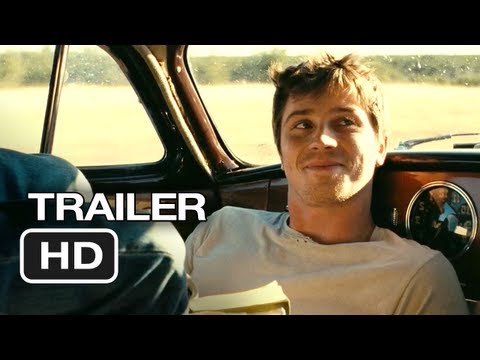
In Salles’ faithful and lively adaptation, Sam Riley is Sal Paradise (the Kerouac stand-in), whose friendship with Dean Moriarity (Garrett Hedlund, playing a version of writer Neil Cassidy) spans from 1947 to 1950. Their road trips are sometimes about the joy of shared company, with the likes of everyone from Carlo Marx (Tom Sturridge channeling Alan Ginsberg) to no less than William S. Burroughs (Viggo Mortensen).
Sometimes their misadventures are defined by sex and drugs, while others are about who you’re sitting next to and savoring the presence of a fellow artist. Dean’s on-again, off-again girlfriend Marylou (Kristen Stewart) is the wild card who keeps up with Dean’s wildest impulses, while Dean’s wife Camille (Kirsten Dunst) exudes a tolerance for Dean’s unpredictable lifestyle that is only surface level.
The editing by François Gédigier (who shaped hall-of-fame works like “Dancer in the Dark” and “Queen Margot”) is brilliant – there isn’t a dull scene here. “On the Road” always buzzes and crackles long before the scene that takes place in a jazz club.
Of the outstanding ensemble cast, Hedlund is so magnetic as Neal, that I had to keep reminding myself that he’s not a bigger star. Riley is pretty good, but it’s Hedlund’s movie. Mortensen is awesome as Burroughs and captures the author’s fuzzy, tragic madness.
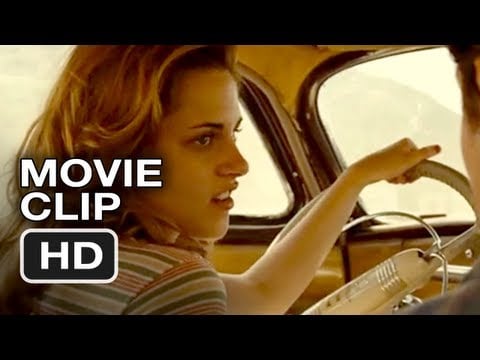
Salles recreates the time of dreaming troublemakers who wanted to explore and experience life’s possibilities. It speaks to any generation that pushes against conformity.
Salles was a smart, ideal pick for this, as the art direction and tone bring us back to this time and place of youthful recklessness, guarded optimism and the shared notion of life as an ongoing adventure. “On the Road,” both the novel and film, recognize how vital these times and friendships are.
The time, according to Kerouac, when life with Dean was “my life on the road.”
Salles lingers on the loveliest moments, such as the bittersweet, beautifully played final scene. The film is flush with vignettes that feel fully realized and not rushed, capturing “the purity of the road.” The sequence where we watch as Kerouac writes “On the Road” in fittingly portrayed as a feverish writing session.
At this point, J.D. Salinger’s “The Catcher in the Rye” (1951) remains one of the few essential works of literature that have eluded a film adaptation, but I digress. What Salles does here is faithfully recreate the period, lean into character and the moment-to-moment sense of discovery (but without becoming episodic).
There is an undeniable joy to those first experiences of freedom in our youth, when we wander outside of our comfort zones and garner companionship or get in trouble.
Sometimes both.
I read Kerouac’s novel when I was in college, as a recommendation from my friend Ben Bonnet, who would also introduce me to counter-culture art and films. Ben was the Dean in my life who got me into alternative bands and insisted I listen to The Beatles’ “White” album, which is now my favorite work from The Fab Four.
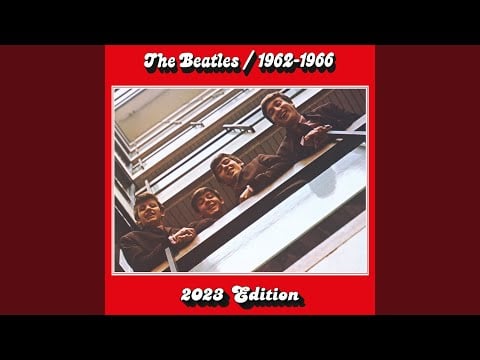
My many adventures with Ben, while innocent compared to the characters in Kerouac’s novel, were full of firsts and eye-opening introductions to various art forms that shaped who I am today. After college, I remained frequently in touch with Ben, who was my friend for 30 years until his death last month.
Learning of his passing felt like a chapter of my life had come to an end.
I can still hear Ben’s voice, his laughter and now cherish every anecdote, every story, every word I remember sharing with him. In the hours of discovering he died, I immediately played our favorite tunes from The Beatles, “Norwegian Wood” and “You’ve Got to Hide Your Love Away” and rewatched “On the Road,” recognizing the friendship of Sal and Dean as a window to what my moments with Ben felt like.
Great art does this, allowing us to reflect and be grateful for those memories, which are trapped in the past and all the more valuable for their distance.
The post How’ ‘On the Road’ Proved All the Naysayers Wrong appeared first on Hollywood in Toto.
from Movies - Hollywood in Toto https://ift.tt/96yXPGS









0 Comments