“Pennies from Heaven” (1981) is the American remake of an acclaimed BBC musical mini-series that somehow came out during the early 1980s and, unlike “Xanadu,” “Can’t Stop the Music” and “One from the Heart,” wasn’t savaged by critics.
Herbert Ross’ film also didn’t find an audience.
Crowds were put off by a cast-wildly-against-type Steve Martin, starring in a non-dramatic role and a tone that couldn’t be more far removed from “Grease” (1978), which was the most current and beloved American musical when “Pennies from Heaven” briefly played in theaters.
Discovering the film today, after so many contemporary musicals matching its darkness and bold act of genre defiance, it not only plays ahead of its time but emerges as an essential movie musical.

Martin stars as Arthur Parker, living in Chicago in 1934, struggling to sell sheet music and cheating on his wife, Joan (Jessica Harper), with Eileen, a schoolteacher (Bernadette Peters). Arthur’s messy homelife grows dire when a horrible crime is committed, and he becomes a suspect.
The story is so dark, and Martin’s character is such a rotten husband, it becomes hard to take in the third act. Yet, there’s brilliance on a scene-to-scene basis, from the rawness of the “real” scenes (the three leads are extraordinary and real) to the virtuoso production of the musical numbers, that resemble the best of Busby Berkeley-choreographed musicals, namely the Lloyd Bacon-directed masterpiece “Footlight Parade” (1933).
Martin is excellent, never shying away from the physical and dramatic demands of his ugly character. Peters and Harper are also excellent, though Christopher Walken’s phenomenal, one-scene cameo, as the wealthy and ruthless Tom, is the biggest knockout.
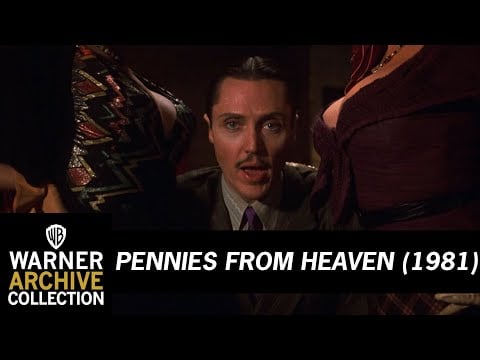
Arriving at the mid-point, Walken doesn’t just explode on screen with a killer number (with “Let’s Misbehave”), he shares a master-class scene with Peters afterward; whereas Peters’ Eileen is starving, desperate to keep Tom interested, even if it means prostituting herself. While Eileen flirts with pained eyes at Tom, Walken casually drops this line: “…if you lie to me, I’ll cut your face.”
The way Walken says this, in such a casual, matter-of-fact way and Peters shows Eileen committing to her doomed flirtation, is devastating.
Ross’ body of work overall, which includes Neil Simon’s “The Goodbye Girl” (1977), the ’80s essential “Footloose” (1984) and even “Steel Magnolias” (1989), is underrated.
“Pennies from Heaven” might be his masterpiece.
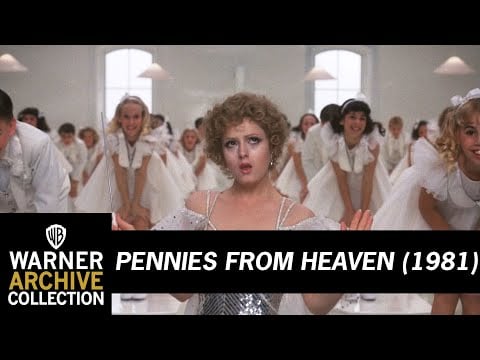
Even as an American remake of the celebrated Dennis Potter BBC mini-series, everything here feels like a major creative risk. The musical numbers aren’t just dreams or fantasies but an extension of the character’s passions and desires.
Ross matches the grandeur, majestic beauty and wonder of Busby Berkley musicals, but “Pennies from Heaven” is also an edgy art movie about how the Great Depression brought out the worst in everyone.
The moments of compassion and splendor are eventually overwhelmed by the darkness within the material. In other words, don’t expect a Happy Ending, even as so many musicals promise exactly that.
Here, the parting reassurances and optimism in the characters are strictly present in their dreams, not their reality.
Decades of offbeat, “downer” musicals, ranging from “Dancer in the Dark” (2000), “Kiss of the Spiderwoman” (2025) and even “Little Shop of Horrors” (1986), make “Pennies from Heaven” easier to absorb today than the wild alternate it emerged as in the ’80s.
Make no mistake – “Pennies from Heaven” is one of the most daring and underappreciated films of the 1980s and one of the all-time greatest American musicals.
The post Why ‘Pennies from Heaven’ Was Decades Ahead of Its Time appeared first on Hollywood in Toto.
from Movies - Hollywood in Toto https://ift.tt/M9kHl7B










0 Comments