Joel and Ethan Coen’s “The Man Who Wasn’t There” (2001) is one of their later-period masterpieces that has always been overlooked.
The new Criterion Collection release sheds a needed light on this acclaimed but lesser-known work, which, astonishingly, resulted in the Coens sharing the Best Director award at the ’01 Cannes Film Festival, with none other than David Lynch (who also won for “Mulholland Drive”).
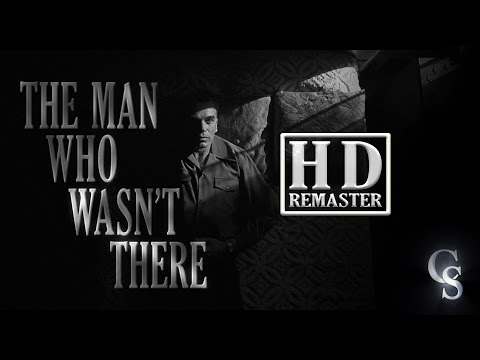
“Fargo” (1996), “The Big Lebowski” (1998) and “No Country for Old Men” (2007) may be Coen’s creative calling cards (and what an amazing trio they make) but “The Man Who Wasn’t There” is every bit as rich, shocking and funny as the other neo-film noirs.
Billy Bob Thornton plays a quiet but skilled barber named Ed Crane, who has been faithfully cutting heads in a 1949 barbershop in California with his brother-in-law, Frank (Michael Badalucco). Most of Crane’s dialogue comes in the form of narration, which perfectly sets up the plotlines and instructs us on the best way to provide a haircut.
Ed discovers that his wife, Doris (Frances McDormand), might be having an affair. This leads Ed into blackmailing Doris’ boss, “Big Dave” (James Gandolfini), which is the start of the character’s tumbling into a pit of moral grime and shocking turns of fate.
RELATED:
WHY ‘FARGO’ FRANCHISE IS BOTH NECESSARY AND RARE
‘MILLER’S CROSSING’ REVIEW: CLASSIC COEN BROS
There’s also a subplot involving Ed’s friendship with “Birdy” (Scarlett Johansson), a pianist hoping for a career, and the possibility of UFOs. The Coens explore where America was in 1949, where citizens were fearful of where the world was headed and how moral compromise and doing the wrong thing for the “right” reasons will end in self-destruction.
Remember, it’s a Coen brothers film noir, like their 1984 classic “Blood Simple,” not a fable, like the wonderful 1987 “Raising Arizona,” but still containing a concentrated quirkiness and some hilarious moments.
This was the last true Coen Brothers masterpiece, though their 2016 “Hail, Caesar!” came close. The brothers have subsequently split to make solo efforts – I love Joel Coen’s “The Tragedy of Macbeth” (2021), while Ethan Coen has been hard at work making darkly comic thrillers like “Honey Don’t!” (2025).
Whether they ever work together again or are now committed to solo projects, their body of work has recurring themes and approaches but is full of versatile narratives and genres.
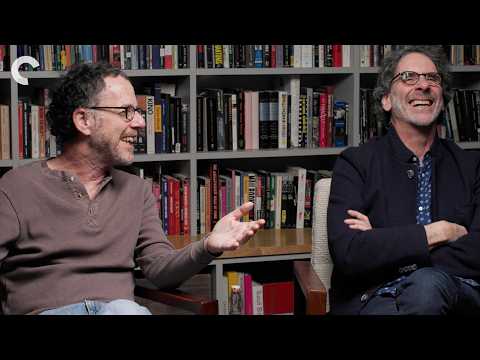
Around the time of “Intolerable Cruelty” (2003), I thought I had fallen out of love with their output (the Tom Hanks-led “The Ladykillers” in 2004 didn’t do much for me, either). Most longtime fans cite the Best Picture Oscar winner “No Country for Old Men” (2007) as the turnaround Coen brothers film for them.
It’s similar to how Martin Scorsese’s “The Aviator” reignited a whole new fanbase for him in 2004.
“The Man Who Wasn’t There” hit me much harder.
Thornton is amazing in this for the most obvious of reasons – he’s so still and underplays the part but manages to give Crane such depth and an inner life.
Yes, Roger Deakins’ gorgeous black and white cinematography is a wonder to behold and amazes in every scene, but the story is also moving and engaging.
Crane is, indeed, a “modern man” who is aware of and participates in ideas of what the future will be like, namely the chaos, rebellion and new modes of business that mark the next decade ahead of him.
As funny and layered as the best from the Coen brothers, though many regard it, then and now, as too cold and detached. The real word to use in describing this film is deadpan.
Tony Shalhoub and Badalucco capture the Coen cadence and give wonderful character turns. A young Johansson (the same year she did “Ghost World,” no less) is another outstanding component.
Her character isn’t a gimmick or femme fatale but someone whose presence in Crane’s life eventually becomes a real problem. Even though Johansson and the Coens keep her role from becoming an obvious femme fatale, we’re still deep in film noir territory here.
The hall of fame cinematography, the sets and even the choice of music is at a master-class level.
Aside from “True Grit” (2010) and “O Brother, Where Are Thou” (2000), the Coens often struggled to find an audience for their period pieces.
“The Man Who Wasn’t There” is an outstanding drama that returns us to a simpler time but, like Crane’s grave mistakes, also makes us grateful that some things remain buried in the past.
The post ‘Man Who Wasn’t There’: Coen Bros’ Overlooked Noir Masterpiece appeared first on Hollywood in Toto.
from Movies - Hollywood in Toto https://ift.tt/7KyoG1D










0 Comments