The best Pixar movies are meant for children but evoke something special for adults.
Look no further than the “Toy Story” franchise, a near-perfect case of storytelling that appeals to young and old alike.
“Animal Farm” does the opposite.
The tale, based on George Orwell’s revelatory novel, is neither goofy enough for kids nor savvy enough for their parental units. And, in bringing the story back to life, director Andy Serkis has found the imperfect sweet spot – a movie meant for neither demographic.
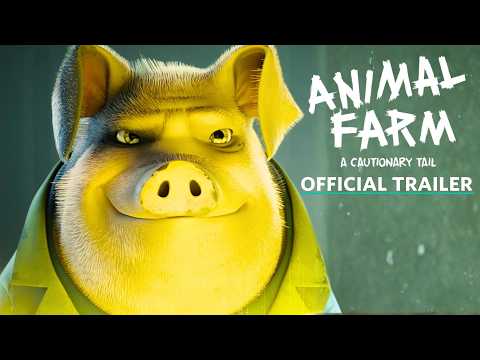
The story opens with a farm facing disclosure from a wicked, no good bank. The animals, including Lucky the pig (Gaten Matarazzo) and friends are targeted for the slaughterhouse but recoil at the destination.
They overpower the humans and strike out on their own. Free at last!
Except their freedom is short-lived. The animal community conjures up a list of societal rules, including All Animals Are Equal, but some threaten to break those commandments.
That includes Napoleon, an ungainly boar voiced by an effective Seth Rogen (assuming you can get past his annoying pot laugh). The animals come up with some wily innovations, producing electricity on their own terms.
The societal fractures start to show, and even the sober voices like Boxer the horse (Woody Harrelson) and Snowball (Laverne Cox in a gender-swapped role) are swarmed by greed and mischief. Matters grow worse when the farm’s success draws the attention of a villainous CEO (Glenn Close), all too eager to exploit what the animals have built.
Serkis’ vision looks wonderful, both with the fully realized animal portraits and gleaming tech that evokes an authoritarian vibe. Except the film’s story is all over the map, both tonally and with its comic sentiment.
One minute, it’s a wacky, G-rated farce with animals farting for comic relief. The next? A beloved character faces his Maker in a tense, emotionally grounded sequence.
This “Animal Farm” can’t decide what it wants to be, so it ends up frustrating all potential audiences.
It’s not a shock that Hollywood would pivot from Orwell’s original vision. It’s like Disney recognizing the timeless appeal of “Snow White and the Seven Dwarfs” and demanding a new approach.
And how did that turn out again?
Yet Angel Studios, a faith-adjacent shingle with content that speaks to Heartland values, gobbled up the finished film. That’s an acquisition that might make its own compelling, behind-the-scenes story.
“Animal Farm” can’t even fully commit to its anti-consumerism shtick, although given the glut of similar messaging, why bother in the first place? Sure, it’s briefly fun to see pigs roaring around in sports cars and playing with their smart phones.
But what’s the point? There’s little to say beyond obvious observations that have been shared in countless other films.
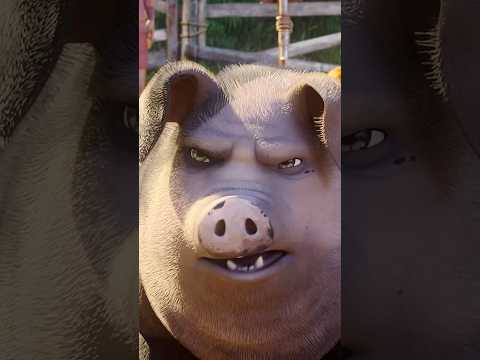
Orwell was different, and that’s why we’re still talking about him today.
Screenwriter Nick Stoller (“Get Him to the Greek,” The Five-Year Engagement”) proves a terrible choice for the project. His sense of satire is wobbly, and his eagerness to reinvent the source material is suspect.
It’s a miracle Napoleon doesn’t don a red hat at some point.
Children’s movies can be sophisticated and frothy, if carefully orchestrated from start to finish. “Animal Farm” has no such luck, leaving audiences scrambling to find the reason behind the project.
HiT or Miss: “Animal Farm” may be the most misguided film in some time. It’s neither kid-friendly nor faithful to the source material.
The post ‘Animal Farm’ Targets Capitalism, Not Soviet-Style Repression appeared first on Hollywood in Toto.
from Movies - Hollywood in Toto https://ift.tt/ZnACKlu








0 Comments